Guides
Roadside design studio maintenance plan: how to scope recurring care
A studio hands its decision record to the care file on day one, then closes each cycle in five lines so the next observer reads facts, not guesses.
A design studio ends its job with a decision record: what it looked at, what it set aside, what it could not resolve. That record is the raw material of a care plan. The plan turns it into dated observation, limited routine tasks and a handoff that survives the people who wrote it.
What to take away
- Move the studio's decision record into the care file on day one, before anyone writes a new checklist.
- Date the baseline and label every image and note with its viewpoint and source.
- Write observations, not conclusions. "No visible change from the March reference view" is a fact; "no problem found" is a claim.
- Close each cycle in five lines and keep the superseded plan version.
- Refer anything past routine observation to the owner, the engineer or the State Historic Preservation Office.
Day one: move the studio record into the care file
The care file starts as a copy, not a blank page. Carry over the features the studio identified, the images it relied on, the access limits it hit, the questions it left open, the priorities it ranked and the person who agreed to follow up.
Then split that material in two. One pile is recurring attention: a viewpoint photographed each season, a task someone can actually perform. The other pile is a one-time decision that needs an owner, a cost figure or a qualified review. Mixing the two is how care plans grow tasks nobody can explain a year later.
Date the baseline on the day the plan begins. An old photograph shows a past appearance and belongs in the file as history, not as the reference for present condition.
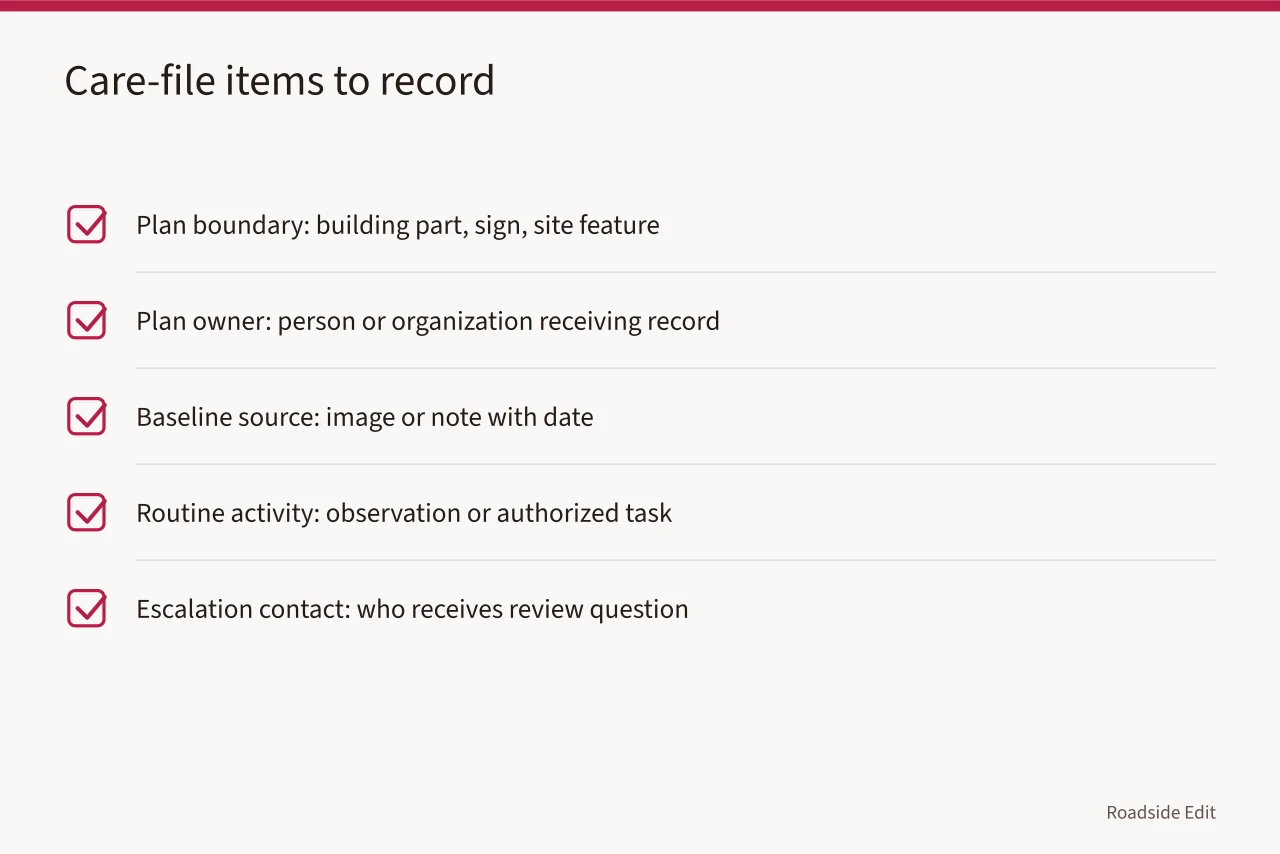
| Care-file item | What to record |
|---|---|
| Plan boundary | Building part, sign, site feature or route area included |
| Plan owner | Person or organization that receives the record |
| Baseline source | Image or note, with date, viewpoint and location |
| Routine activity | Observation or authorized task, not a general goal |
| Escalation contact | Who receives a question that needs a different review |
Write routine items as observations, not verdicts
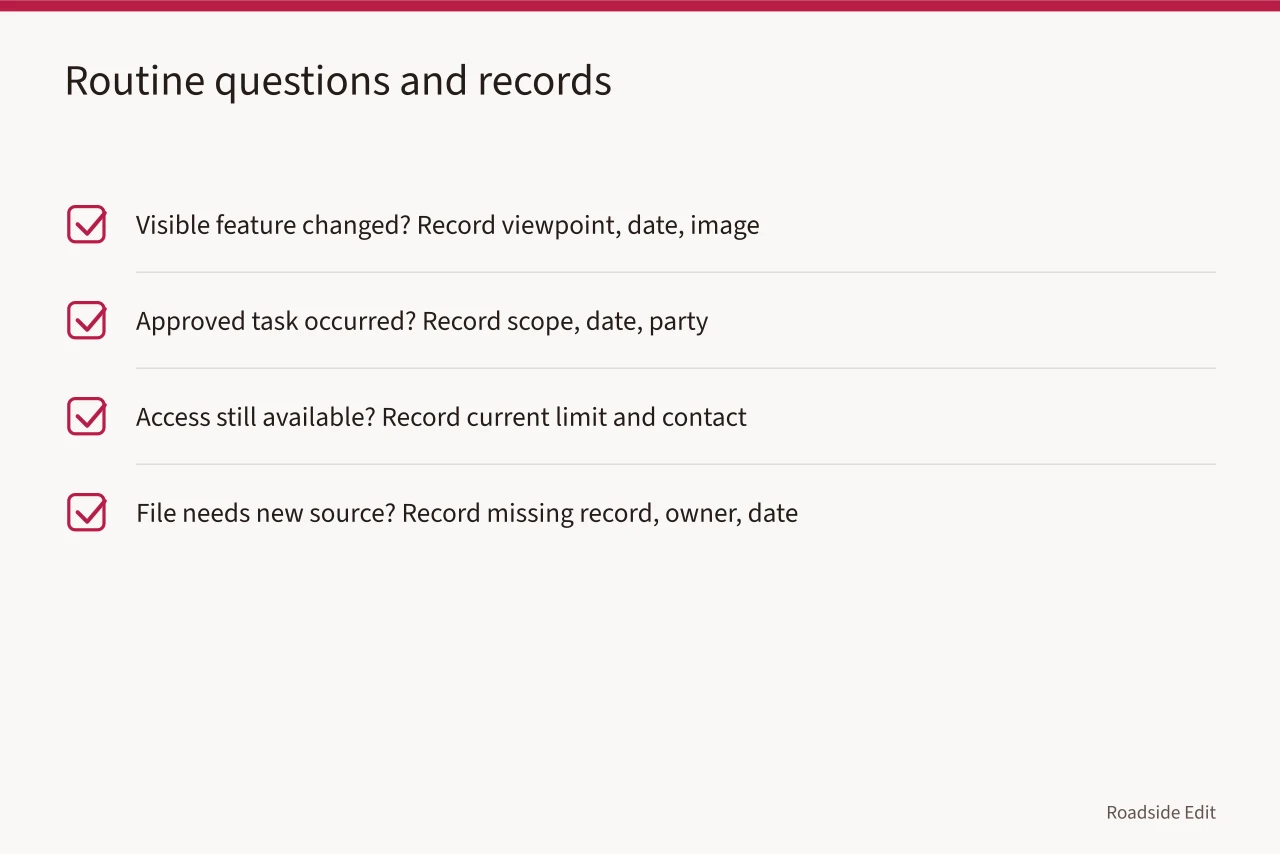
Every recurring item should answer a question someone will actually ask. A photo comparison shows whether a visible feature changed. A records check confirms whether an approved task happened. A review triggered by a storm or a reported problem shows whether the file needs updating.
EPA's preventive-maintenance guidance for school facilities organizes care around an inventory, tailored checklists, procedures, schedules and walkthrough notes. Review EPA's preventive-maintenance guidance. It is written for schools, not roadside places, and its structure is what transfers: named assets, scheduled checks, notes that show what happened.
| Routine question | Record after the check |
|---|---|
| Has a visible feature changed from the baseline? | Viewpoint, date, image, limited observation |
| Did the approved task occur? | Scope, date, responsible party, source note |
| Is access still available for the next check? | Current access limit and contact |
| Does the file need a new source? | Missing record, request owner, follow-up date |
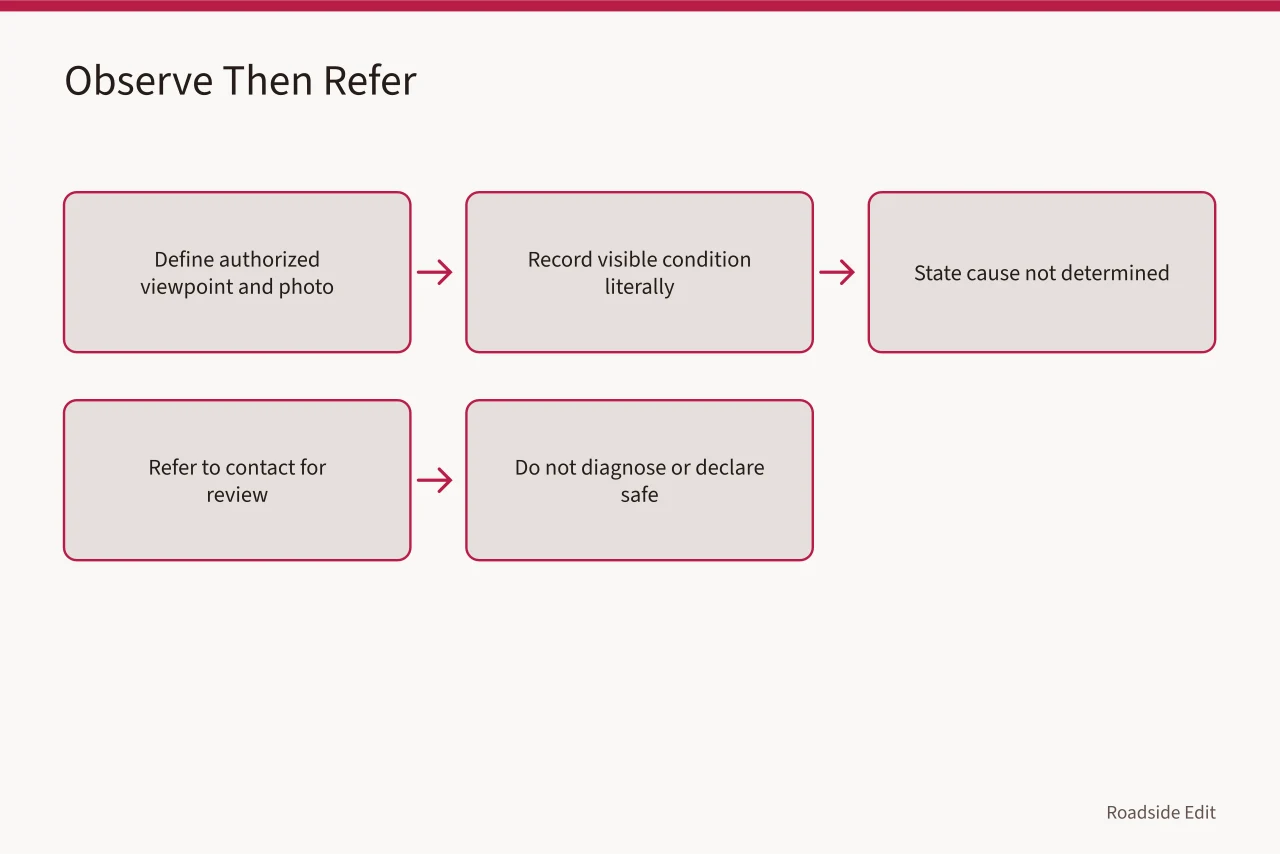
Do not write that a feature is sound, stable, repaired or safe unless a record supports the word. A routine visual check cannot show those things, and the next reader will treat the word as evidence.
Water and weather: observe, then refer
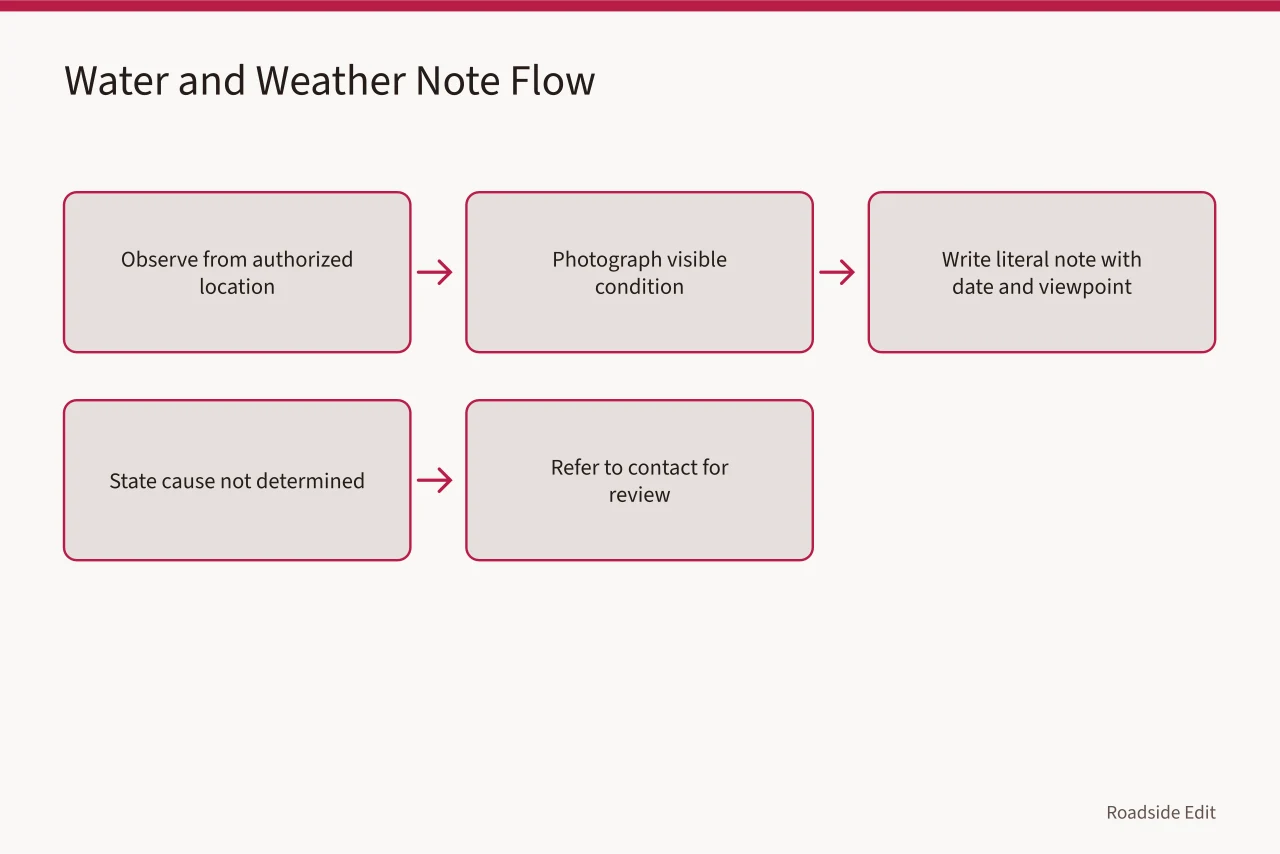
Roof edges, gutters, openings, ground drainage and exterior surfaces belong in the care discussion. They do not belong in a routine observer's diagnosis. Define what can be seen from an authorized location, what gets photographed, and who receives the report.
The National Park Service brief on unwanted moisture covers maintenance concerns around roofs, gutters, walls, openings and ground drainage, and it calls for recurring inspection. Read NPS Preservation Brief 39. It does not diagnose any particular roadside feature, and it is not a substitute for a licensed engineer or the authority having jurisdiction.
Use one note format and keep it literal: "On [date], the observer recorded [visible condition] at [location] from [viewpoint]. Cause not determined. Referred to [contact] for review." That sentence survives a handoff. A guess about the cause does not.
Keep care separate from project work
Routine care slows deterioration and keeps the record current. It does not replace a project scope, and it never authorizes one.
When an observation raises a question past the plan boundary, mark it for escalation and stop. A new condition may need owner authorization, a cost decision, a permit inquiry, technical review or a fresh studio discussion. Expanding the task on the spot puts work in the file that no one scoped, priced or approved.
The National Park Service brief on exteriors of small and medium buildings treats regular inspection, monitoring, seasonal maintenance and written work records as the core of exterior care. Read NPS Preservation Brief 47.
It covers historic buildings, and the line it draws applies to any care file: complete the limited maintenance records, then refer the larger question rather than declaring it settled.
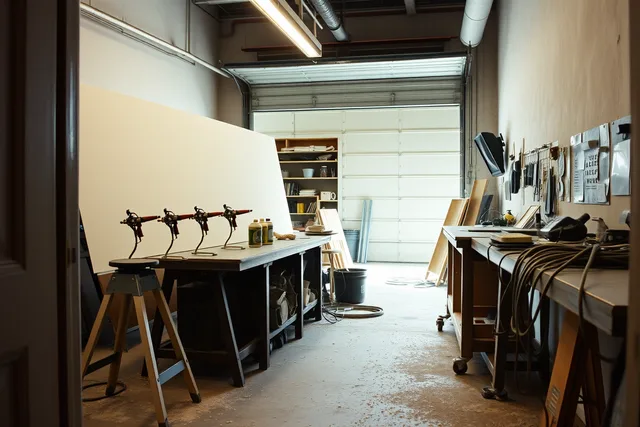
The image is visual context only. It establishes nothing about the condition, ownership, care history or work status of any roadside property.
Close each cycle in five lines
At the end of a cycle, file the observation notes, task records, source documents and open questions together, and name the next review date. Keep the superseded plan version with a note on why it changed. That is how the next reader tells a changed building from a changed method.
National Archives guidance holds that records tied to a project, study, transaction or subject stay together to preserve their context. Review NARA's recordkeeping requirements. It governs federal records, and it is a workable model for a studio handoff: current plan, prior version, sources and decisions in one path.
The closeout itself is five lines:
- What area was observed, or what limited task occurred?
- What record documents it, and what is its date?
- What changed from the baseline, if anything?
- Was the item closed, deferred or referred for a different review?
- Who owns the next action, and when is it due?
Public updates should match the record
A public update may only say what the file supports. "The team completed a scheduled observation" is accurate. "The property is in good condition" is not, unless a qualified review put that finding in writing.
If the work has moved from routine care to a proposed repair, say proposed or under review until a source supports a later stage. Check the wording against the closeout lines before it goes out.
A public claim that outruns the file is the hardest kind of error to walk back, because the record that would correct it is the one nobody can find.
Common questions
Is a studio-care checklist a repair specification?
No. It organizes observation, routine tasks, records and handoffs. Work that needs a different scope, a licensed trade or a preservation review goes to that reviewer, not into the checklist.
How often should the plan be reviewed?
Set an interval that fits the feature, the access and the project, then add event-driven reviews for storms or reported problems. The trigger belongs in the plan, written down, so the review does not depend on someone remembering to check the record.
What should an observer do when the cause of a change is unclear?
Record the visible condition, date, viewpoint and location, then use the escalation contact. Cause and remedy belong to the engineer, the electrician, the environmental authority or the State Historic Preservation Office, whichever the question reaches.