Guides
How vintage diner interior options compare on condition and disclosure
Compare Formica and Wilsonart laminates, Vitrolite glass, Armstrong linoleum, and Mannington flooring. Check condition and disclosure limits for each.
What to take away
- Compare named diner interior options by documented condition and clear disclosure.
- Real options include Formica laminate, Wilsonart laminate, Vitrolite glass, Armstrong linoleum, and Mannington commercial flooring.
- Stools and booths from Chicago Hardware & Fixture and Royal Seating are also real choices.
- Condition claims need dates, sources, and limits.
- Paid placement must be labeled near the entry.
- A photo shows appearance, not origin or current condition.
Vintage diner interiors options comparison works best as a guide to reading evidence, not choosing work for a particular property.
An article can help a reader understand how a historic record distinguishes retention, repair, replacement, a compatible substitute, or a documented re-creation. It cannot inspect a diner, determine condition, or decide which option is appropriate for a real room.
Compare seven real diner interior options
The options below are real materials and suppliers. Each row gives one condition check and one disclosure point. A general article can report public facts. It cannot certify a specific diner's condition.
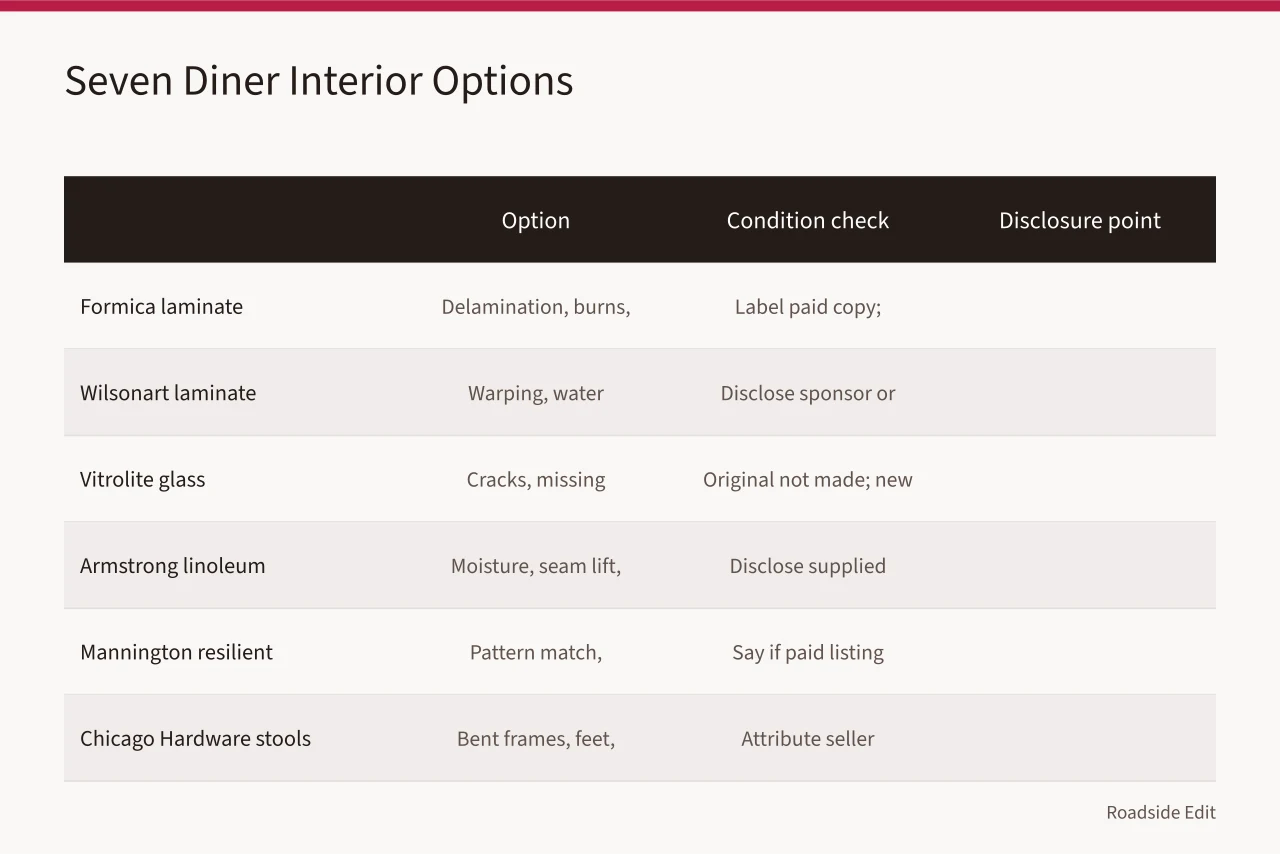
| Option | Condition check | Disclosure point |
|---|---|---|
| Formica laminate countertops | Formica Corporation dates to 1913. Check delamination, burns, and edge damage. | Label paid supplier copy. Say if a pattern is a current reproduction. |
| Wilsonart high-pressure laminate | Wilsonart was founded in 1956. Check warping, water swelling, and mismatched seams. | Disclose if a fabricator or supplier sponsored the entry. |
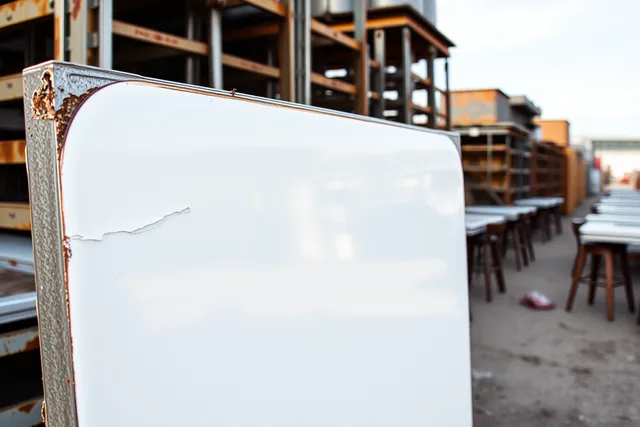
| Vitrolite structural glass | Libbey-Owens-Ford made Vitrolite until the 1940s. Check cracks, missing panels, and backing failure. | Original Vitrolite is not made today. Say if a panel is new. |
| Armstrong Flooring linoleum | Armstrong sells linoleum. Check moisture, seam lifting, and wear-layer loss. | Disclose whether a sample or copy was supplied. |
| Mannington Commercial resilient flooring | Mannington Commercial sells sheet and tile. Check pattern match and subfloor condition. | Say if a paid listing influenced placement. |
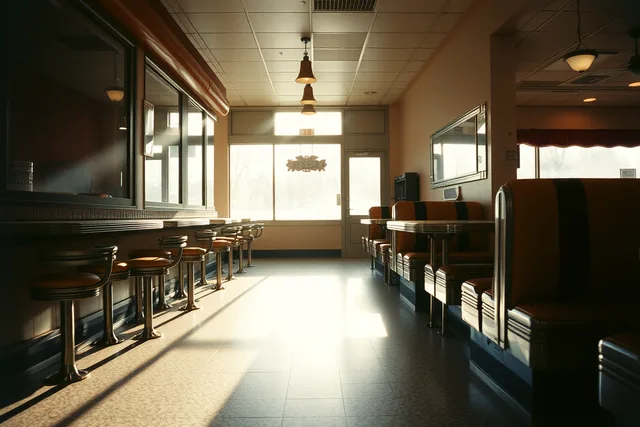
| Chicago Hardware & Fixture stools | The company made diner stools and tables. Check bent frames, missing feet, and broken swivels. | Used and salvaged parts vary. Attribute seller claims. |
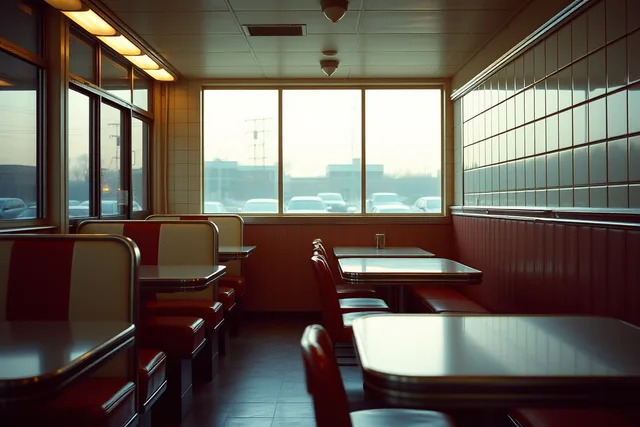
| Royal Seating booths | Royal Seating sells booths and chairs. Check frame condition, upholstery, and lead times. | Label sponsored entries and minimum order limits. |
Formica and Wilsonart are high-pressure laminates. Formica Corporation dates to 1913. Wilsonart was founded in 1956. For both, condition checks include delamination, burns, and edge damage. Disclosure should say if a pattern is a current reproduction or if a supplier paid for placement.
Vitrolite is structural glass. Libbey-Owens-Ford made it until the 1940s. Original Vitrolite is no longer produced. Condition checks include cracks, missing panels, and backing failure. Disclosure should say if a panel is new.
Armstrong Flooring sells linoleum. Mannington Commercial sells resilient sheet and tile. Condition checks for both include moisture, seam lifting, and wear-layer loss. Disclosure should say if a sample or copy was supplied.
Chicago Hardware & Fixture made diner stools and tables. Used and salvaged parts appear through dealers. Condition checks include bent frames, missing feet, and broken swivels. Attribute seller claims and say if the seller paid for placement.
Royal Seating sells booths and chairs. Condition checks include frame condition, upholstery wear, and lead times. Disclosure should label sponsored entries and minimum order limits.
Begin with a narrow comparison question
The clearest option articles start with a limited question: "What alternatives does the public record identify for this feature or room?" That is a reporting question. It does not ask, "What should this owner do?" The difference matters. A writer may summarize a dated plan, a preservation publication, a HABS record, or an attributable business update.
Write an evidence boundary before drafting. For example: "This article compares the documented language used to describe alternatives for a named diner interior; it does not recommend a treatment."
It keeps the article useful when covering photographs, archival drawings, project descriptions, agencies, or businesses that request inclusion.
The National Park Service says that evaluating replacement and substitute materials involves the need for replacement, the feature's contribution to historic character, and physical and visual compatibility. Its substitute-materials evaluation supports that limited editorial principle. It does not tell a writer that a particular diner feature should be retained, repaired, or replaced.
Separate condition findings from disclosure
Readers often meet words such as preservation, rehabilitation, restoration, and reconstruction as though they are interchangeable. They are not. Use the term the source uses, then explain only the source's stated meaning. Do not make a label sound more certain than the evidence.
For Formica or Wilsonart, a source may say "laminate counter" without stating condition. For Vitrolite, a source may say "glass panel" without stating whether the panel is original. For Armstrong or Mannington flooring, a source may say "linoleum" or "resilient sheet" without a date. Keep those gaps visible.
A photograph can support a careful visual description. A historic survey can support a statement about the date or terminology in that survey. A current business statement can support an attributed update. None of those sources, by itself, authorizes a property-specific conclusion.
Identify the feature before comparing choices
Options become vague when the article discusses an entire diner as one object. Break the record into individual topics. Examples include counter, stools, booths, flooring, and ceiling. Then cover wall finish, circulation path, lighting, signage, and service area. Do not claim that each is original, character-defining, damaged, or replaceable unless the source says so.
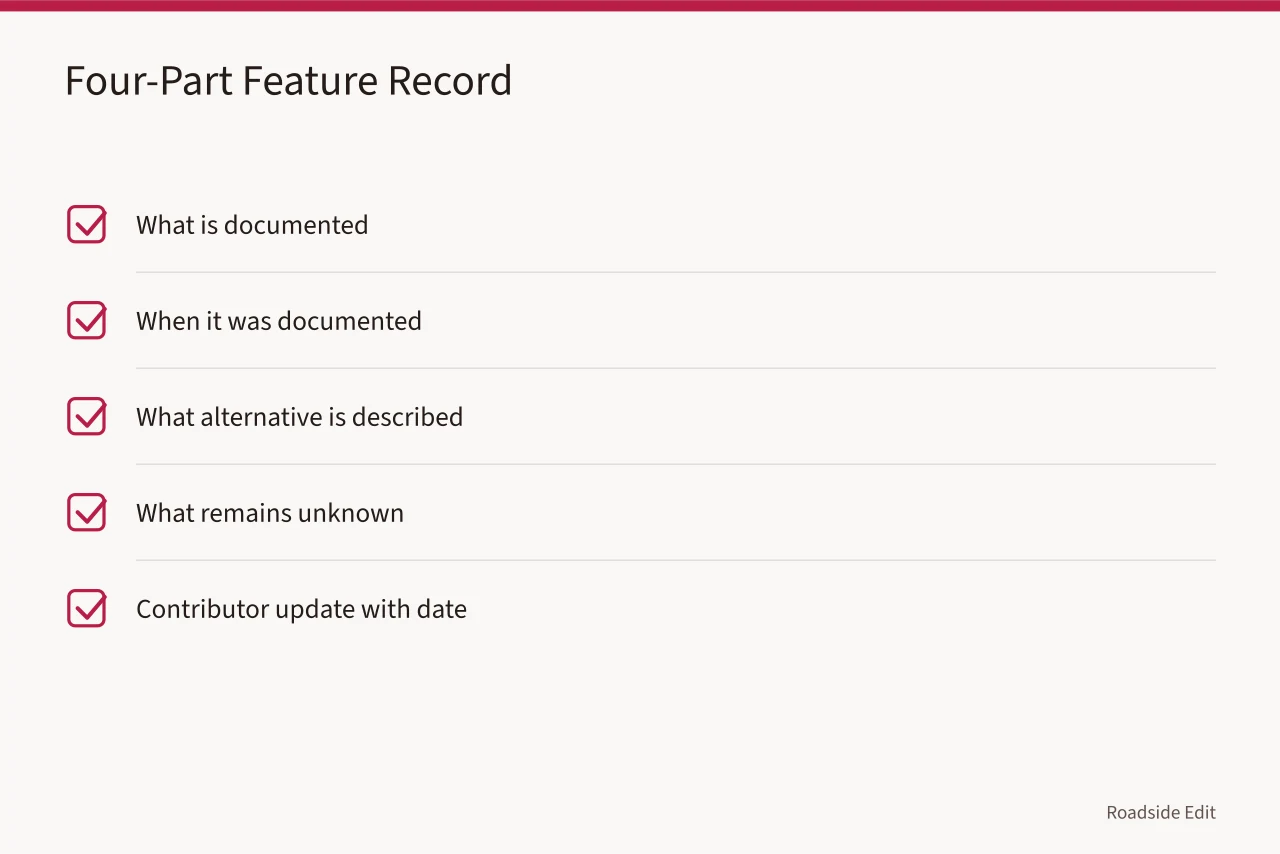
For every topic, build a small record with four parts: what is documented, when it was documented, what alternative is described, and what remains unknown. This is better than producing a dramatic "before and after" story from a single image. It also makes later corrections easier.
| Feature record | Example of cautious wording |
|---|---|
| Source observation | "The 1978 image shows a curved counter in the foreground." |
| Date limit | "The image identifies the interior at the time of the photograph." |
| Stated option | "The report describes repair of the named surface." |
| Unknown | "The public material does not establish current condition." |
| Contributor update | "The operator reported a later change on [date]." |
Avoid decorative certainty. Phrases such as "the diner must keep its original booths" or "the counter should be replaced" make a writer look decisive, but they exceed ordinary reporting. If a technical or legal conclusion is necessary, the reader needs an appropriately qualified person for the actual property, not a general article.
Compare alternatives with the same fields
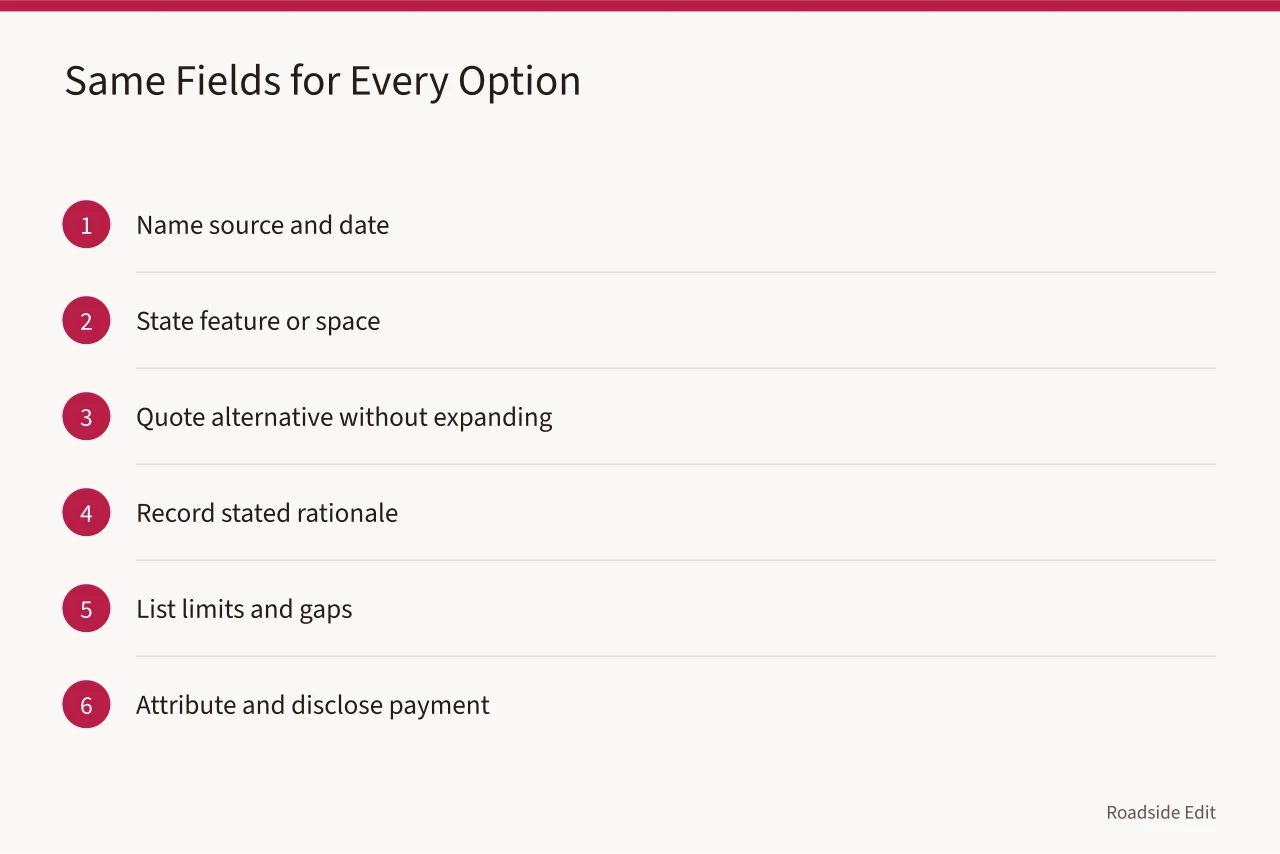
An options comparison is fair only when every alternative is described using the same categories. If a source provides a condition statement for one alternative but no condition statement for another, say so. If an alternative has an identified cost in one record but no scope in another, do not rank them. The goal is clarity, not a winner.
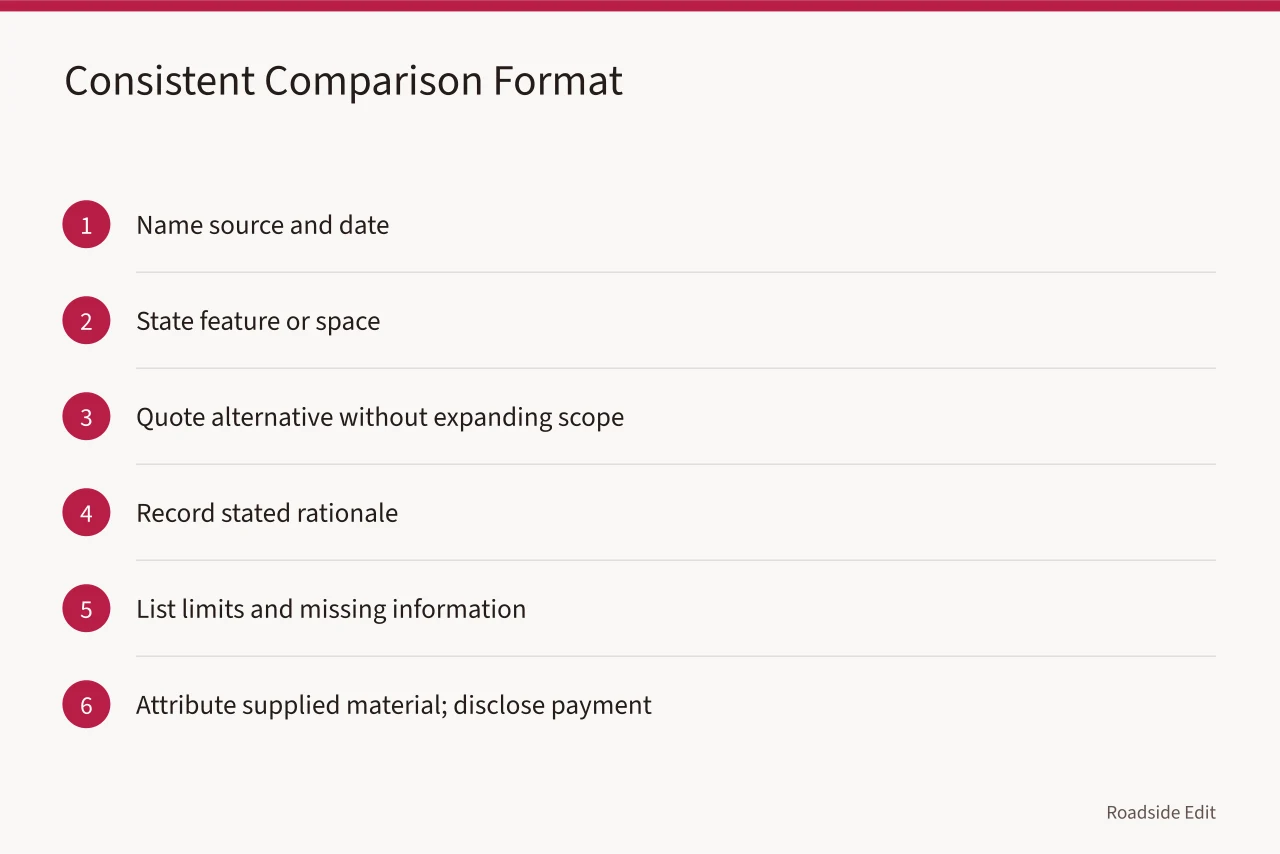
Use a consistent comparison format:
This method supports useful local coverage. A preservation group, design practice, museum, historical society, or diner business may provide a public project record. The article can list a documented contribution if it follows the same inclusion rule for everyone. The article should never make payment, proximity, or publicity a substitute for evidence.
Do not confuse a substitute with a duplicate
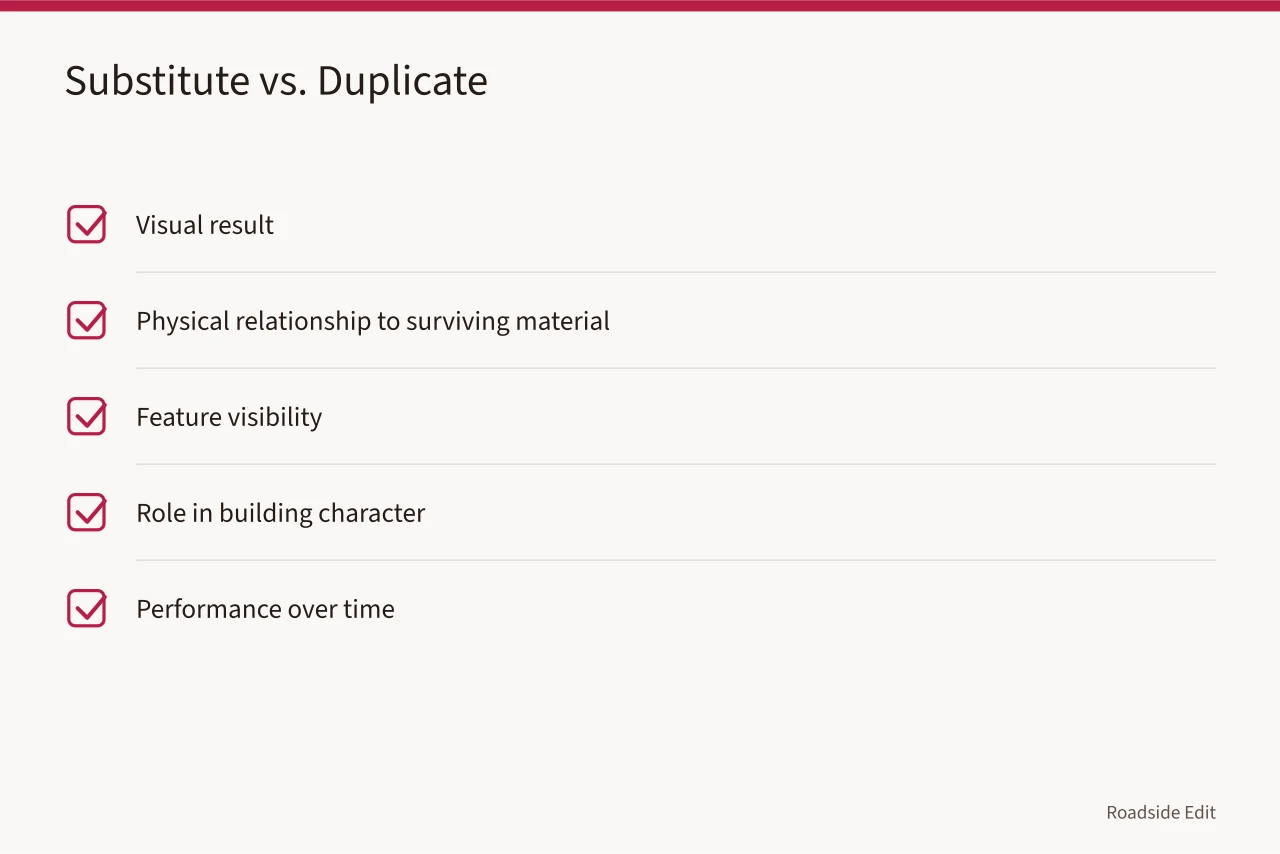
A general article can tell readers those categories exist, but it cannot resolve them for a specific counter surface, booth upholstery, or floor.
The safest language is comparative and sourced. Say that a publication describes a substitute as an alternative under stated conditions. Say that a historic guidance page emphasizes repair before replacement in its context. Do not say that a modern product is "approved," "maintenance-free," or "best" unless the exact claim and its limits are supported by a source.
This matters especially when businesses want placement in a materials list. A listing can include a manufacturer description, location, named service, or public case study with a disclosure. It cannot be an unqualified guarantee of compatibility, performance, or price.
Put documentation before a period-style claim
An article may discuss a diner that changed over decades. It should not erase later layers merely because an earlier look seems more photogenic. If a source identifies a particular historic period, name that date and explain that the label comes from the source. If the evidence is incomplete, call it incomplete.
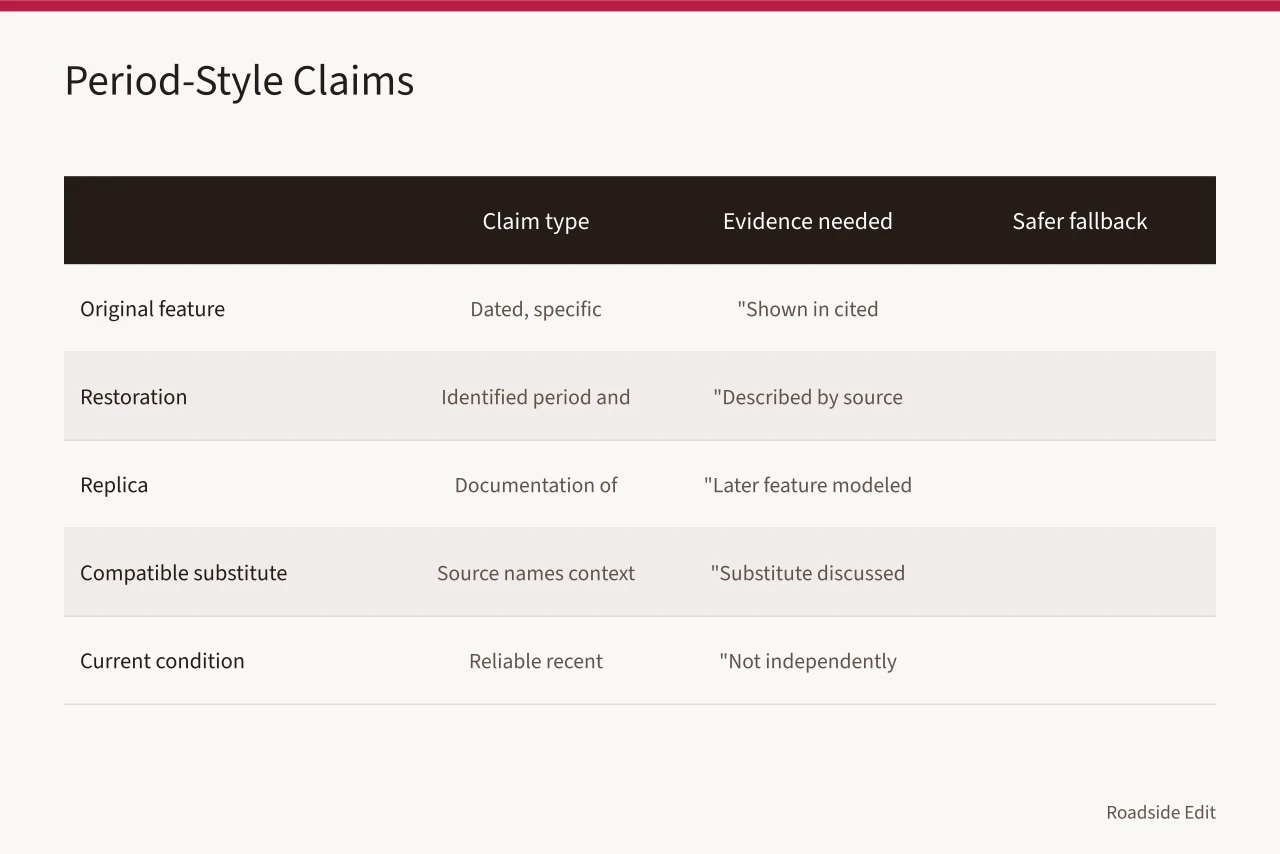
Treat period-style language with care: "Original," "authentic," "restored," and "recreated" can read as factual or commercial promises. Before using one, ask: Does the source establish it, is the statement about material, appearance, date, or current use, and could another source contradict it?
A corrected article is more credible when it says exactly what changed and why.
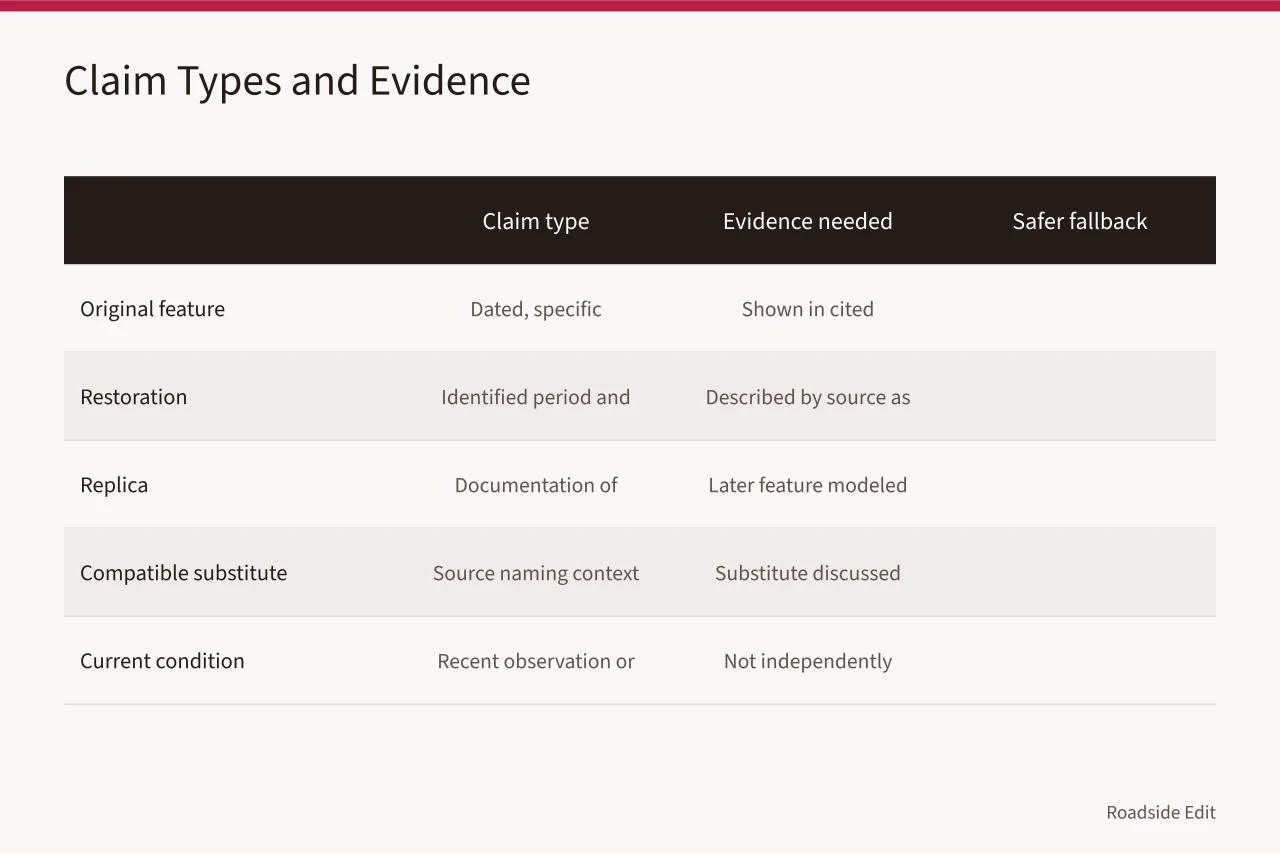
| Claim type | Evidence needed for publication | Safer fallback |
|---|---|---|
| Original feature | Dated, specific documentation | "Shown in the cited historical image" |
| Restoration | Identified period and evidence | "Described by the source as restoration" |
| Replica | Documentation of a contemporary re-creation | "A later feature modeled on the cited record" |
| Compatible substitute | Source that names the context and limits | "A substitute discussed in the cited guidance" |
| Current condition | Reliable recent observation or attributable update | "Current condition was not independently established" |
Make the disclosure part of the comparison
An agency or business may have valuable information, including archives, photographs, or a dated description of work. That information should be welcomed when it is specific. The editorial rule is simple: identify the contributor, label any paid placement or supplied copy, and do not let the contribution determine the factual conclusion.
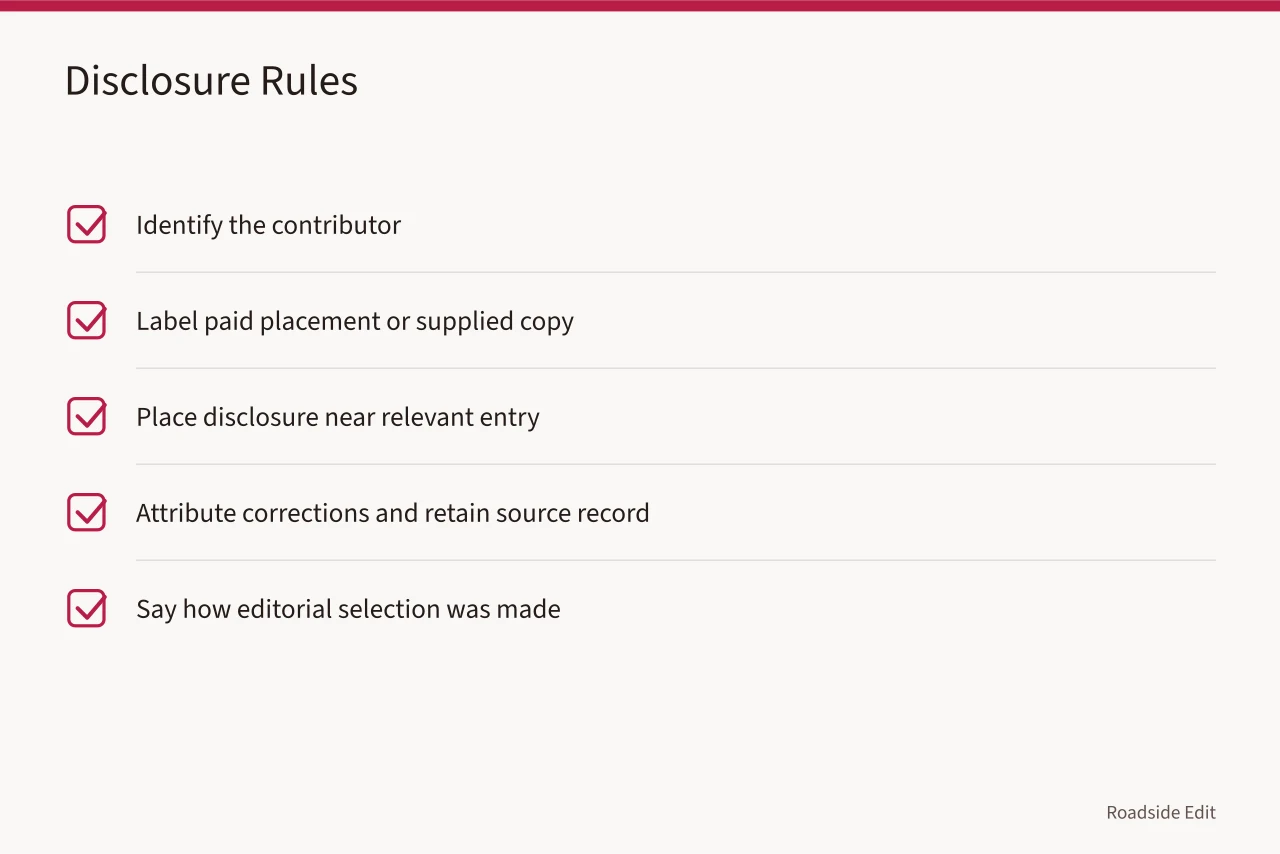
Place the disclosure near the relevant entry. A generic footer is easy to miss and cannot repair an otherwise misleading comparison. If a business pays for placement, the inclusion label should say so. If the business supplies a correction, attribute the statement and retain the source record. If the feature is an editorial selection, say how the selection was made.
Build a comparison readers can revisit
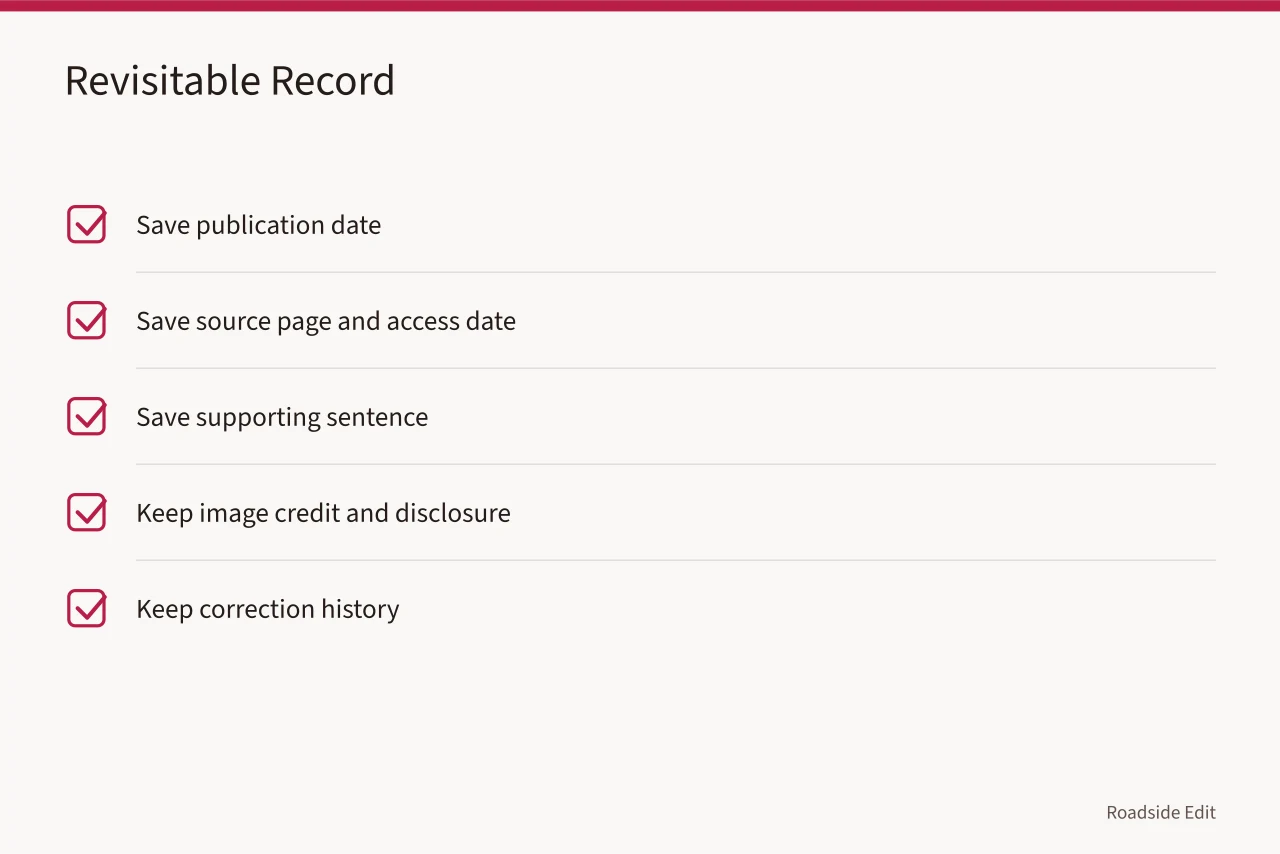
Every option article should leave a traceable record: save the publication date, source page, access date, and supporting sentence. Keep the image credit, contributor relationship, disclosure, and correction history.
When a later record changes the story, revise the specific text and update the editorial note. Do not silently rewrite a claim that readers or a listed business could reasonably rely on.
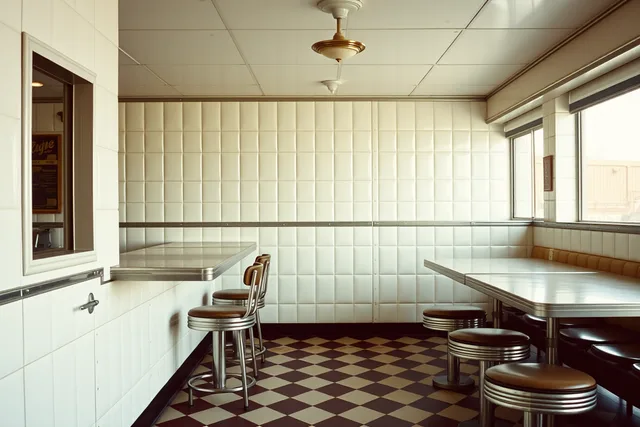
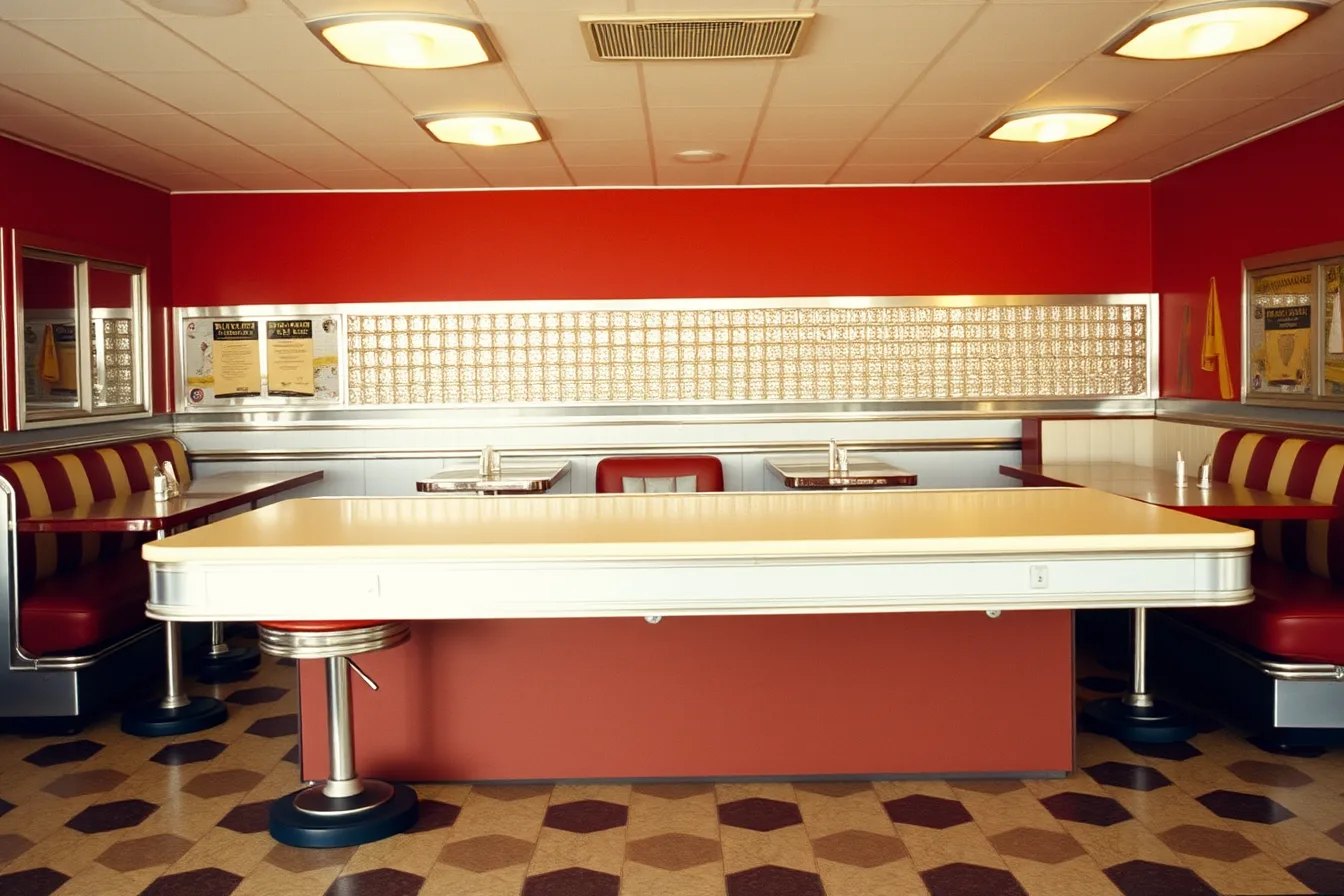
For an article about visual choices, one image can make the page easier to read, but it is still only an illustration unless it documents the named property and claim. Use a direct credit page and write a caption that says what the image does and does not show.
The National Archives primary-source explanation supports the article's central limit: a source should be used for the question it can actually answer, not stretched into a verdict about another property.
The Library of Congress primary-source analysis guide begins with observation before reflection and investigation. This is why visual comparison should describe a visible feature before assigning an origin, condition, or treatment history.
The Federal Trade Commission's endorsement guidance says material connections that could affect how readers evaluate an endorsement should be disclosed clearly and conspicuously. Disclosure provides context; it does not validate a paid listing's factual claims.
Common questions
Can an article say Formica is better than Wilsonart?
No. Condition and disclosure decide fit for a named diner. A general article can compare documented traits only.
Can a historic photo prove a counter is original Formica?
No. It can document what appears in the image at its stated date. Establishing origin or current condition requires additional, appropriate evidence.
Can paid placement appear in this list?
Yes, if it is plainly labeled near the entry and the factual statements still meet the same sourcing and attribution standard as editorial entries.
What should happen when a new source conflicts with an article?
Review the cited claim, correct it where the new evidence warrants, and retain a dated editorial record of the change.
In this guide
- Vintage diner interiors options comparison: what to check before you publishA pre-publication comparison of six vintage diner interior options, with the evidence each one needs and the sourcing claims a writer must not make.
- Vintage diner interiors: questions editors should ask before comparing optionsVintage diner interior options questions for 2027 help editors compare repair, replacement, material claims, historical context, and source limits.