Industry
How to Research Roadside Building Case Studies
Learn how to research roadside building case studies through National Register nominations, permit histories, property comparisons, and owner interviews.
What to take away
- Published case studies are marketing. The documentation behind them is the actual record.
- Nomination files are free, searchable and describe buildings in detail written before the work started.
- The recurring problem across projects is not money or craft. It is the code conversation, held too late.
- Ask owners what they would do differently. That answer is the case study.
Roadside building case studies are more useful when read alongside the records underneath and owners’ accounts. Projects that stall may be less likely to be written up, so paperwork and direct questions can reveal details a polished account leaves out.
Both are more accessible than people think.
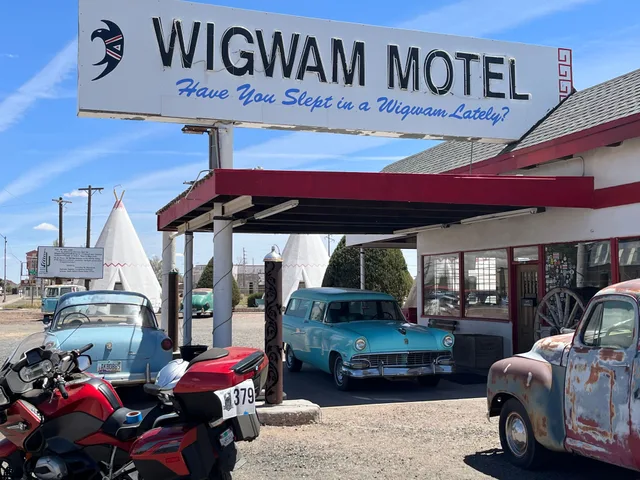
Five roadside properties offer starting points for this research: Wigwam Village Motel No. 6 in Holbrook, Arizona; Blue Swallow Motel in Tucumcari, New Mexico; El Vado Motel in Albuquerque, New Mexico; Wagon Wheel Motel in Cuba, Missouri; and Boots Court Motel in Carthage, Missouri. Each has a National Register nomination, a permit trail, or both.
Where the real record lives
Buildings that are listed carry a nomination describing them in detail, prepared before any recent work. That description is the baseline against which everything since can be measured.
The National Park Service explains how to search the National Register database and its research tools, which is how you find those files for a specific property or a whole county. Read one and you have the building as it was, in prose, written by somebody who looked at it carefully.
Compare that against the building today and you have a case study nobody published.
The National Register database contains more than 96,000 listings. The El Vado Motel nomination, for example, describes the 1937 motor court before its 2018 rehabilitation.
The Wigwam Village Motel No. 6 in Holbrook, Arizona, has a National Register nomination that documents its 1950 concrete teepee units and office before later repairs.
The recurring lesson is the code conversation
Across the projects that go badly, one pattern repeats: the code questions were asked after the design was fixed.
Requirements for exits, fire separation, structure and access apply when a building changes use, and they shape the design fundamentally. The International Building Code is the model that most jurisdictions adopt and amend, and it is the framework a local official is working from when they review a change of use on an old motel or filling station.
Projects that talk to the building official at sketch stage get options. Projects that talk to them at permit stage get requirements. Same code, completely different outcome.
The El Vado Motel rehabilitation, completed in 2018, had to meet current egress, fire separation, and accessibility rules because the motor court became a mixed-use property. The 2010 ADA Standards and the locally adopted International Building Code set those requirements.
The Boots Court Motel in Carthage, Missouri, a 1939 motor court listed on the National Register, is another case where the code conversation shaped the rehabilitation.
What to look for in a case study
- The scope was set after investigation rather than before.
- Water and structure were done first, and the visible work last.
- The owner could say what was original, what was repaired and what was new.
- Somebody kept a photographic record throughout.
- The building went back into use, earning money, rather than becoming a display.
The Blue Swallow Motel in Tucumcari, New Mexico, a 1939 Route 66 motor court listed on the National Register, kept its neon sign and office while the roof and plumbing were repaired first.
The Wagon Wheel Motel in Cuba, Missouri, a National Register-listed Route 66 motor court, is documented in its nomination as a 1936 stone motor court.
Common risks to look for
Starting with the visible. Paint and signs before roof and drainage.
One big phase. A project that cannot pause has no way to survive a funding gap.
No contingency after investigation. Old buildings surprise you, always.
A contractor without old-building experience. Speed is the wrong optimization here.
Silence about mistakes. A project nobody will discuss frankly taught nobody anything.
The El Vado Motel in Albuquerque, New Mexico, sat vacant for years before its 2018 rehabilitation, a case where a funding gap stalled the project.
How to build your own case study
Pick a building you can visit. Read its nomination if it has one, look at the permit history at the building department, photograph it thoroughly, then ask the owner three questions: what did you find that you did not expect, what cost more than you planned, and what would you do differently.
Owners answer this honestly far more often than you would guess, because nobody usually asks.
The sequence a good project follows is set out in the motel restoration steps, and the beginner errors these cases keep illustrating are the same handful every time.
The National Register nomination form is NPS Form 10-900. The National Park Service's Preservation Briefs series, with dozens of free titles, explains how to document and treat historic buildings.
The Boots Court Motel in Carthage, Missouri, is a useful model: its National Register nomination and local permit records document the building before and after its recent rehabilitation.
Common questions
Are nomination files hard to get?
Do owners mind being asked about costs?
Is a failed project worth studying?
How current are published case studies?
In this guide
- Roadside building case studies tips: where to stand on a live siteRoadside building case studies tips for visiting a motel, diner or filling station mid-restoration: permission, scaffold and drop-zone rules, three questions.
- Stay inside the finished project: booking near roadside building case studiesStay in a completed project and you get the case study as accommodation: the owner, the building and the decisions, all available over breakfast.
- Six questions to ask a roadside building owner before you write the case studyAsk a roadside building owner what nearly stopped the project: six questions on flood zone, insurance, phasing and the costs nobody sees in a case study.
- Roadside building case studies booking: what to askRoadside building case studies booking starts with the site: ask the Neon Museum about La Concha Motel and confirm access, timing, fees and weather plans.
- Roadside Building Case Studies: Reading One in the FieldRoadside building case studies start in the field: at The Big Chicken, steel plates, patched footings and paint show what was done — and what was left undone.