Guides
Part of How modern roadside design cost planning works before you commit to a number
How owner teams keep modern roadside cost planning records straight
Modern roadside cost records guide for 2027 helps teams track sources, assumptions, revisions, scope choices, and public-copy limits without losing context.
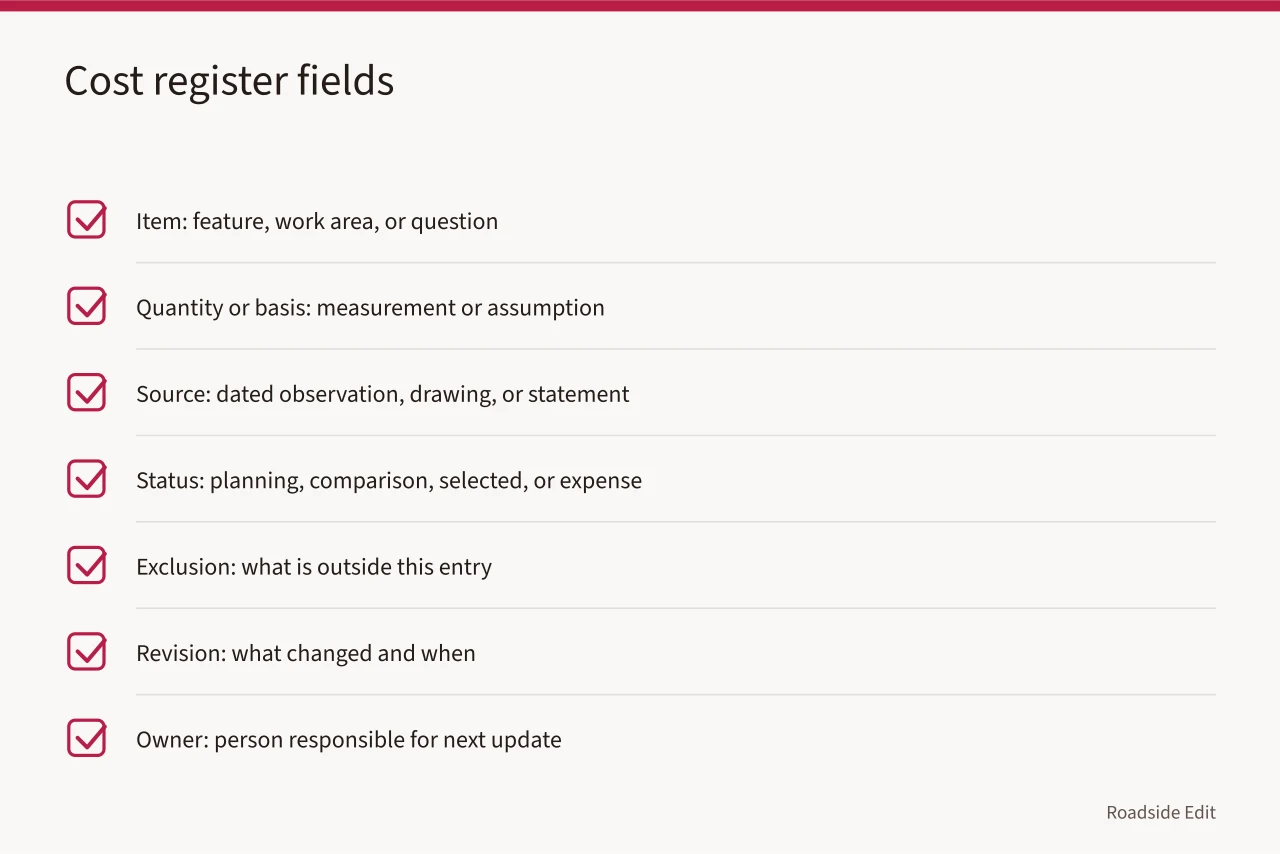
A cost record should explain its own limits. A future reader needs to know what was measured or assumed, which source supplied the information, which option it concerns, and what decision could change it.
What to take away
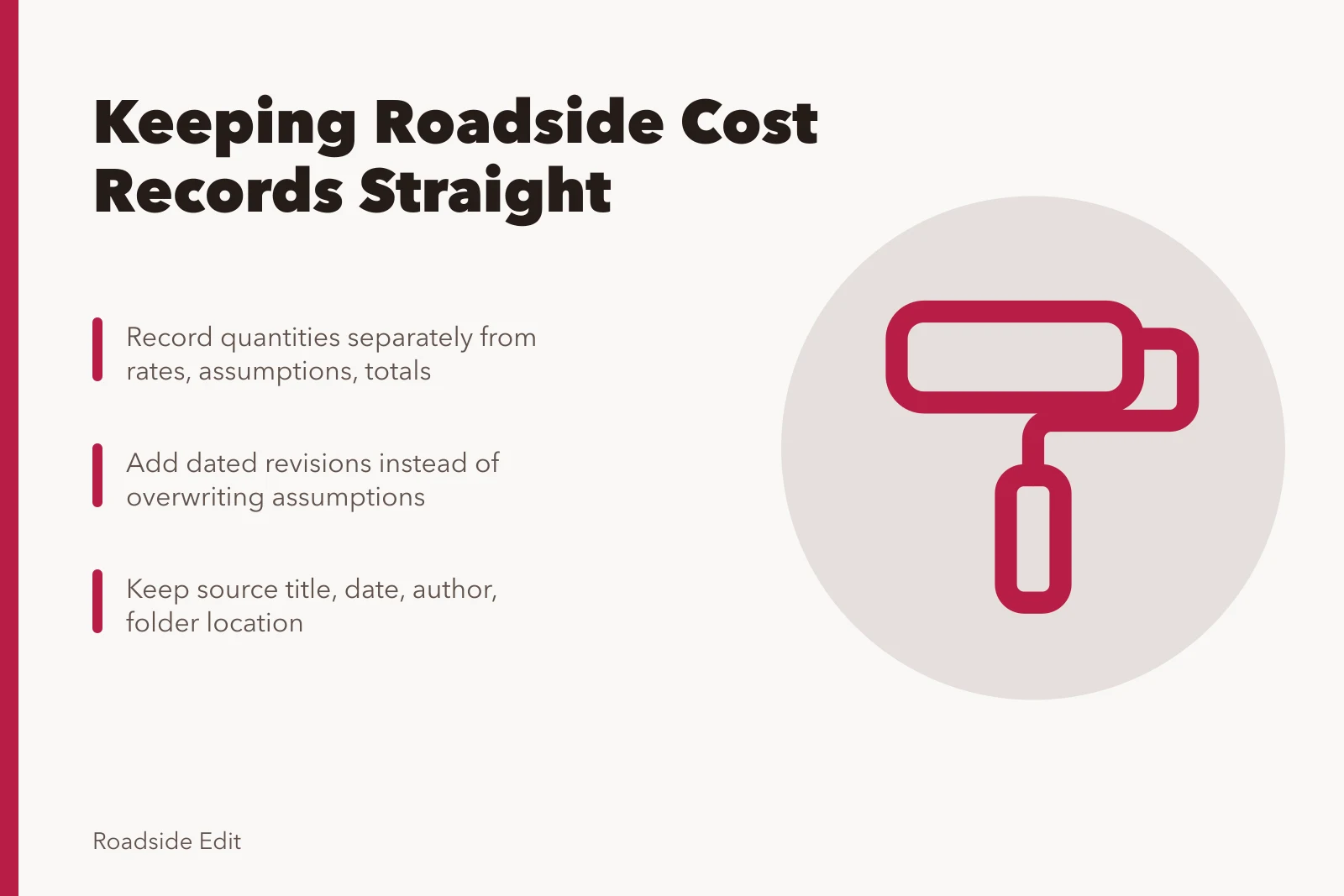
- Record quantities separately from rates, assumptions, and totals.
- Preserve source dates and revision reasons.
- Keep a decision log for scope changes.
- Remove private negotiation and security details from public versions.
Build a cost register
The National Archives advises federal staff to identify records needed to document business and manage them through their life cycle. Read National Archives records-management basics. A roadside cost register is not a federal program, but it needs the same basic discipline: each entry should reveal what it documents and where the information came from.
Keep a correction path
Do not overwrite an assumption when better information arrives. Add a dated revision that says which entry changed and why. If an article mentions a provider, a project, or an amount, keep the source register and disclosure record alongside the editorial copy. This separates factual correction from commercial messaging.
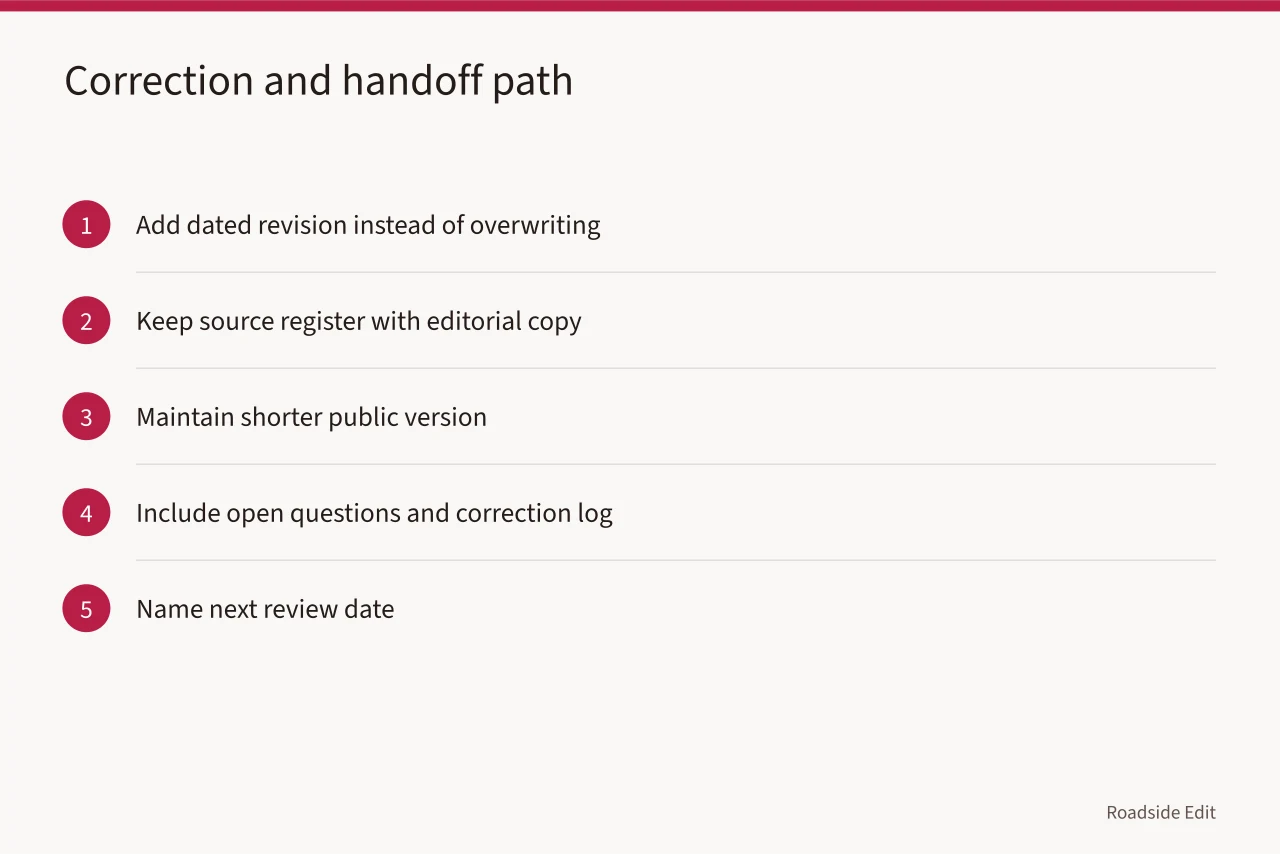
For public use, maintain a shorter version that keeps the evidence boundary while removing bids, personal contacts, private access information, and negotiation history. The public record should clarify, not expose, the planning process.
At handoff, include the latest register, open questions, a list of source files, and the correction log. A new editor should be able to locate the basis for each public statement before revising it.
Name a review date for the next check, especially when a public price claim or supplier statement appears in the material.
Make every record traceable
For each cost-related entry, keep the source document or a note on why it cannot be shared. A good source field has a title or description, document date, author or organization if known, and its project folder location.
A future reader should not have to infer whether a number came from a drawing, field observation, provider proposal, or completed invoice.
NPS documentation standards call for reliable source material and stated limitations so another reader can examine the record. Read the NPS documentation standards. This is not a rule that a private cost file must follow a federal format. It does explain why an entry should distinguish direct evidence from an assumption or owner summary.
| Entry type | Keep with it | Public use |
|---|---|---|
| Quantity | Measurement method, date, and observer | Describe only if supported and appropriate |
| Proposal | Original response, scope, and terms | Do not publish private fee terms without permission |
| Assumption | What is unknown and next check | Do not present as a verified condition |
| Reported expense | Invoice or other reliable record and status | State only what the record proves |
Preserve versions instead of replacing history
When a drawing, scope, or number changes, create a new version. Keep the earlier record, date the new one, and add a one-sentence change note.
The note can say a measured quantity changed, a work area was removed, a decision is pending, or a provider revised terms. Do not assign blame or speculate about a cause the record does not establish.
GSA says cost estimates change as requirements and scope become clearer. Review GSA cost-management guidance. Its examples are part of federal project management, not a formula for local roadside work. The useful recordkeeping lesson is to preserve the information available at each stage instead of treating a later figure as if it had always been known.
Keep a separate correction log for public pages. If an article has repeated a supplier statement, price range, or project description, note the source checked, date checked, exact correction, and reason. This lets an editor repair a factual point without making a hidden change that readers cannot explain later.
Separate project records from promotional copy
Project files may contain sensitive material: fee terms, private correspondence, access details, contact information, and unverified opinions. Do not carry those details into an article or sponsored directory listing. Public copy should rely on material that has a clear source and a reason to be shared.
The NPS Historic Property Project Documentation overview describes how property information can inform later scope and design decisions. See the NPS documentation overview. It does not govern a commercial content site. It supports the difference between preserving a working record and publishing a simplified claim about it.
For a paid placement, identify the commercial relationship clearly. A placement may explain a business's stated service area or submitted profile. It should not become evidence that the business delivered a particular result at a particular property.
Common questions
What belongs in a source field?
Identify the record, statement, or observation that supplied the information, including its date when known.
Is a vendor document a completed-cost record?
No. It records the vendor's proposal or statement unless a separate reliable record supports a completed expense.
Why retain old revisions?
They show why an option or number changed and prevent a stale figure from being treated as current.