Guides
Part of How modern roadside design cost planning works before you commit to a number
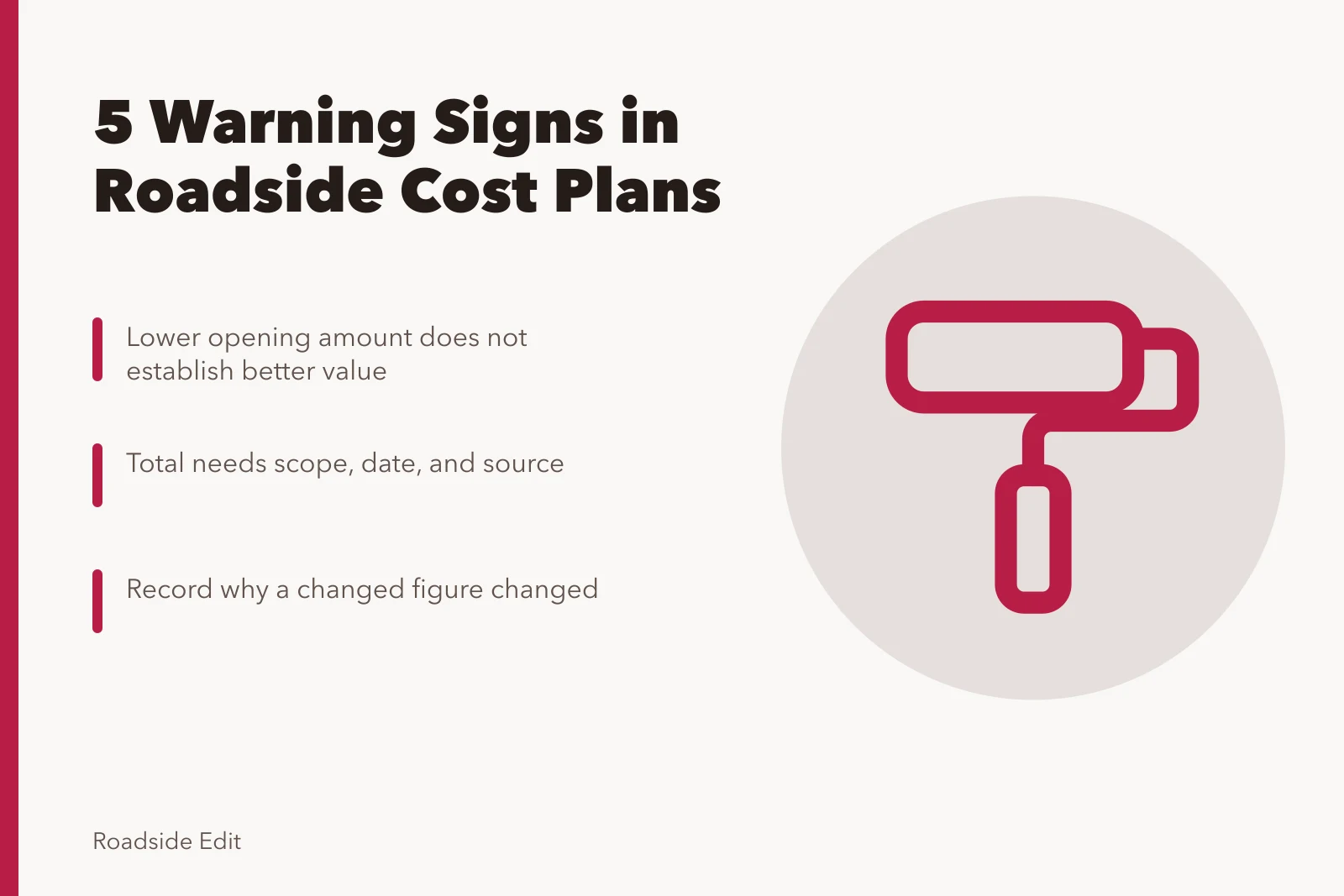
Before you trust a 2027 roadside cost plan, check these 5 warning signs
Modern roadside cost warning signs for 2027 identify false comparisons, unsupported totals, scope drift, missing records, and unclear commercial claims.
Cost-planning problems are usually record problems first. A number may be copied without its date, a concept may be confused with selected work, or two alternatives may be compared even though they solve different tasks.
What to take away
- A lower opening amount does not establish better value.
- A total without scope, date, and source is not decision-ready.
- Compare alternatives only when their purpose and boundary are clear.
- Label commercial material so it cannot be mistaken for site evidence.
Spot weak comparisons
FHWA cost-estimating guidance says a project estimate should be consistent with project scope and that risk and uncertainty should be documented and reassessed. Read FHWA cost-estimating guidance. The guidance is for major transportation projects, not an individual roadside site. Its limited warning applies: an amount without a work boundary or documented uncertainty is weak evidence for a decision.
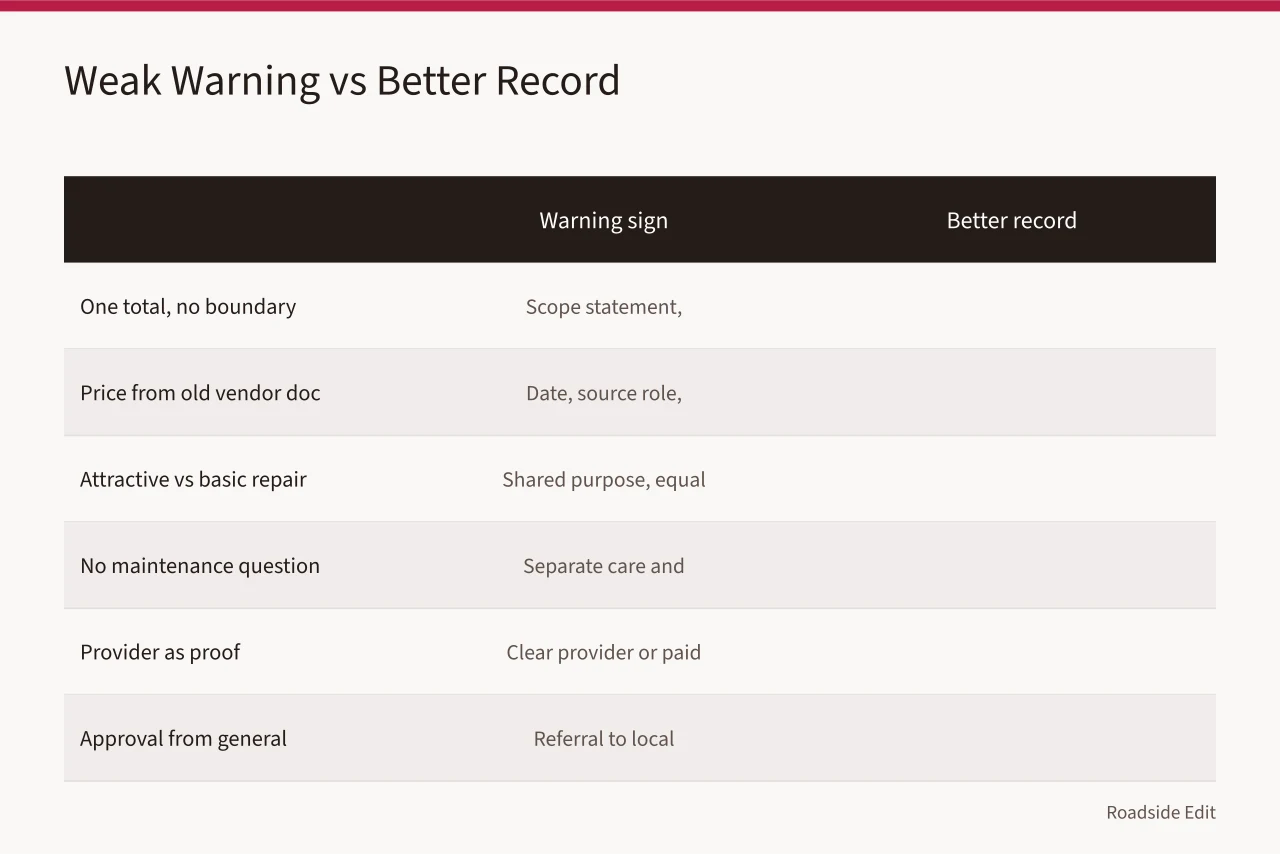
| Warning sign | Better record |
|---|---|
| One total with no work boundary | Scope statement and exclusions |
| A price copied from an old vendor document | Date, source role, and revision trigger |
| An attractive option compared with a basic repair | Shared purpose and equivalent fields |
| No maintenance or update question | Separate care and replacement record |
| A provider listed as proof of performance | Clear provider or paid-placement label |
| A local approval implied by a general guide | Referral to the relevant local process |
Correct the record, not just the number
When a figure changes, record why. The reason may be a revised quantity, a changed project boundary, a new condition, a different decision, or a correction to the source. Retain the old note with a date rather than silently replacing it. This is especially important if an earlier article used the figure in a comparison or list.
Treat pressure for a quick total as a warning sign too. A fast figure may be useful only if its source, scope, and status travel with it. When those fields are unknown, document the gap and decide what must be checked next.
Flag false precision
An exact-looking total can create more confidence than the underlying information allows. Watch for a number with no date, no stated source, no scope version, or no explanation of whether it is an early estimate, fee proposal, allowance, or reported expense.
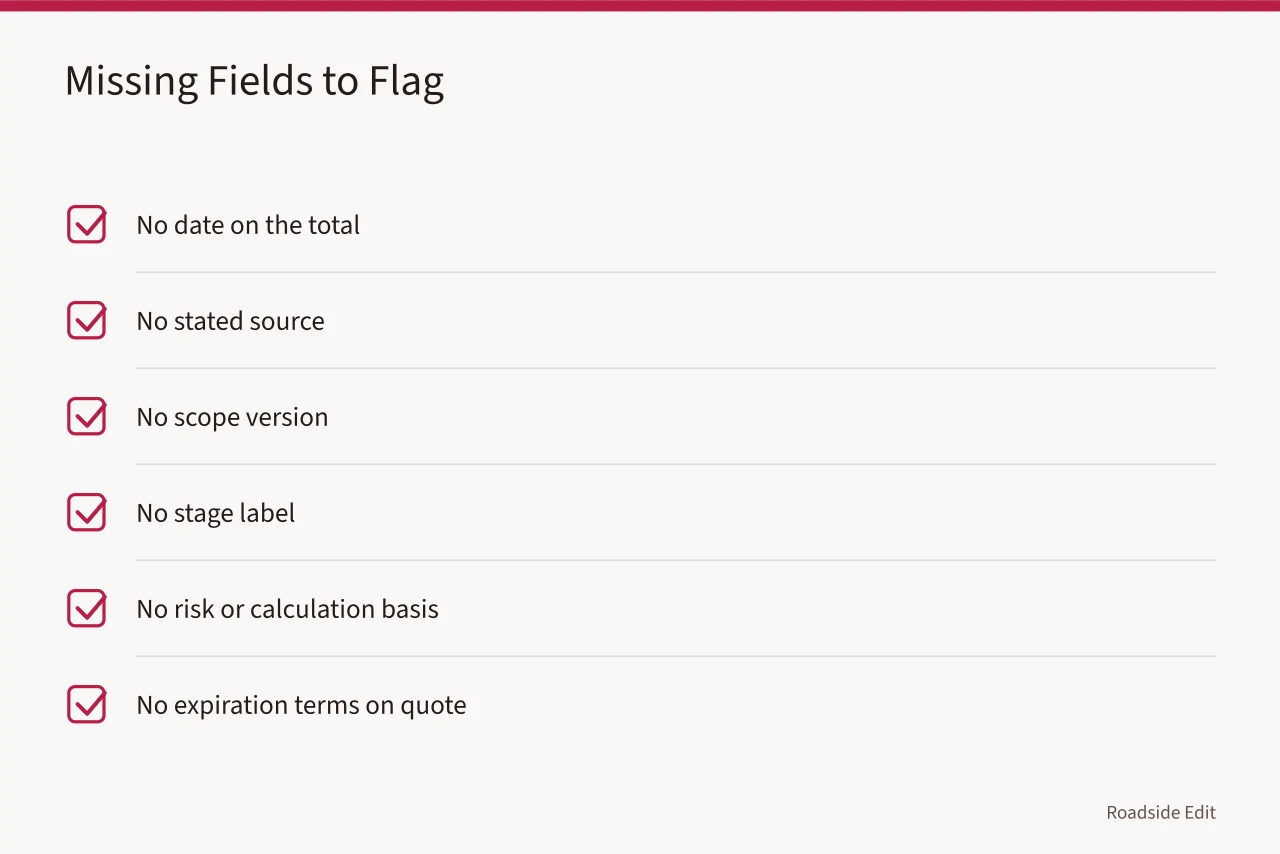
The proper fix is not adding a disclaimer in tiny type but putting the missing fields into the record.
GSA explains that estimates evolve as requirements and scope become clearer. Review GSA cost-management guidance. Its project stages do not set a private cost range. They show why an early planning figure should retain its stage label when someone later compares it with a more detailed proposal.
| If you see | Ask for | Record as |
|---|---|---|
| A single total | Scope, source, and date | Incomplete until clarified |
| A tidy percentage | Identified risk and calculation basis | A stated assumption, not a fact |
| A vendor quote used as a budget | Included work and expiration terms | A provider proposal |
| A revised total | The change document and approval status | A separate version |
Avoid turning a rough comparison into a public claim such as "best value" or "lowest cost." Those phrases require evidence far beyond a short project file.
Flag a scope that cannot be checked
A scope can look detailed and still omit the fact cost planning needs: what work is actually requested. Check whether the record identifies the feature, condition information, intended output, access limits, and responsibilities. It should also identify exclusions.
For an older roadside building or feature, verify the work description ties to the documents that describe it.
The NPS architectural-preservation quality-review checklist includes existing conditions, scope, treatment intent, drawings, specifications, and recordation in its review material. See the NPS preservation QA checklist. It is a federal review checklist, not a commercial cost form. It supports a useful caution: price discussions are not reliable substitutes for project documents.
GSA also states that project scope must be developed before it can estimate cost. Read GSA's scope-and-estimate process. When a provider asks for a clearer description, that can be a normal part of building an accurate record rather than a warning sign about the provider.
Flag weak public attribution
Keep editorial, sponsored, and owner-supplied content separate, because a paid placement may identify a business and explain its stated services but does not verify results at a particular property.
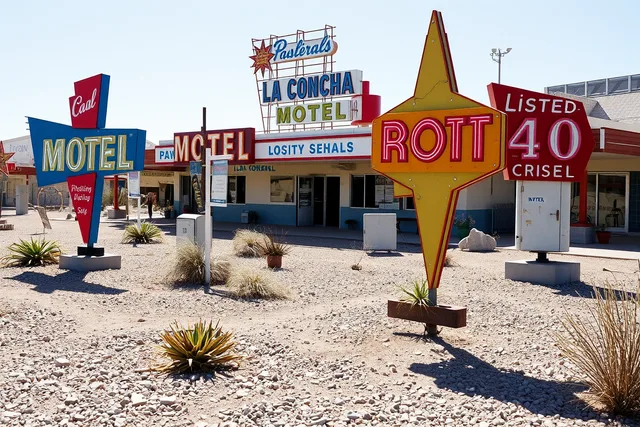
A stock or archival image can illustrate a topic but does not document the condition or cost of a current site. Label each source according to what it supports.
Before publishing a list, remove private fee terms, personal contact details, and unverified statements about competitors. A process statement is normally enough: an owner can say that proposals were compared against stated scope and exclusions without announcing who was cheapest or most qualified.
Common questions
Does the cheapest offer answer the planning question?
No. It may not describe the same scope, timing, conditions, or care obligation as another option.
What is scope drift?
It is when added work changes a project without a corresponding decision and record update.
Should a paid placement include price claims?
Only with clear attribution and context; it must not be presented as a verified site result.