Guides
Motel exterior mistake prevention: 8 errors to avoid in 2027
Eight motel exterior mistakes to avoid in 2027, with public tools and records that help U.S. readers document conditions and route property questions.
Motel exterior mistake prevention begins with accurate observation. A photo, a walkaround, or a submitted note may show something worth documenting. It cannot decide why a condition exists, whether a route is safe, what work is allowed, or which repair belongs on a particular property. This guide names eight errors to avoid in 2027.
What to take away
- Record a visible fact, its date, and its viewpoint before drawing conclusions.
- Keep an observation separate from an estimate, proposal, approval, or completed-work claim.
- Do not publish property-specific repair, safety, code, or permit advice from a general article.
- Send access, utilities, structural, hazardous-material, and immediate-safety questions to responsible people.
- Keep paid placements and submitted business information separate from editorial evidence.
Mistake 1: calling an observation a diagnosis
An image can show staining, a crack, debris, or a loose-looking feature. It does not show every hidden material, access condition, prior repair, or ownership decision. A better note says what is visible and names what remains unknown.
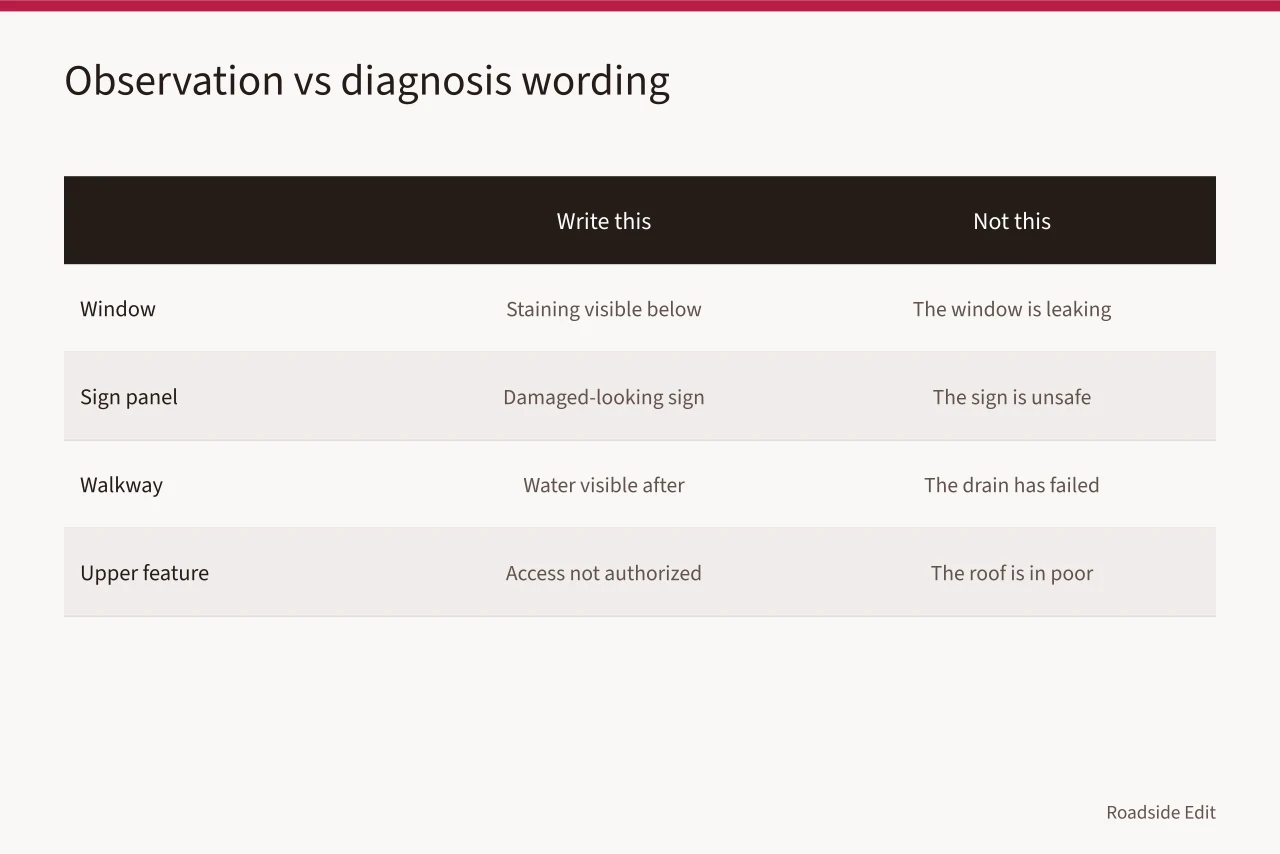
| Write this | Not this |
|---|---|
| Staining is visible below the second-floor window. | The window is leaking. |
| A ground-level view shows a damaged-looking sign panel. | The sign is unsafe. |
| Water is visible near the walkway after rain. | The drain has failed. |
| Access to the upper feature was not authorized. | The roof is in poor condition. |
The difference is more than wording. A narrow observation can be checked later. A diagnosis needs evidence that an ordinary article does not have. If a condition matters, give the responsible owner or qualified reviewer a dated record and a clear question.
Mistake 2: treating one source as a universal rule
The National Park Service says Preservation Briefs help owners spot and address common historic-building problems before work starts. For more detail, Review the NPS Preservation Briefs index, which is free and topic-specific.
It is not a motel repair manual or local code. It points to guidance and reinforces a sensible sequence: understand the problem, consider the building's materials and history, then seek project-specific review.
Do not use a government guide to claim that a particular material must be treated in a certain way at every property. A source may apply to historic buildings, federal projects, workers, or a specialized material. State that context beside the claim. The article becomes more trustworthy when it names what the source does and does not answer.
Mistake 3: skipping the baseline record
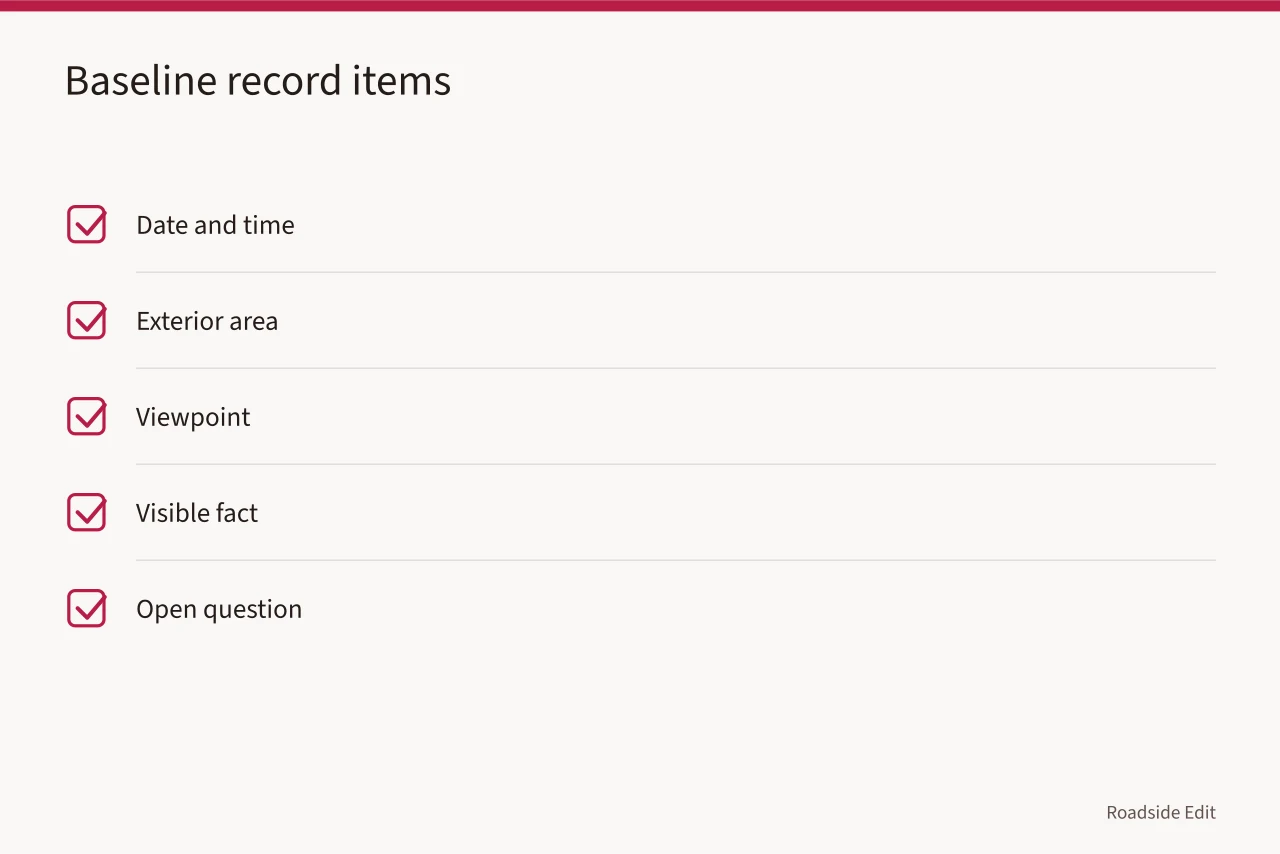
Without a baseline, later images are difficult to compare. Begin with a few repeatable exterior views and a basic inventory. Capture the date, area, viewpoint, visible feature, and source. Use a plain file name such as 2031-07-14-east-wall-view-01 instead of leaving the image as a default camera file.
ExifTool is Phil Harvey's free metadata tool. It reads and writes EXIF fields like date, camera model, and GPS data when present, on Windows, macOS, and Linux. Record keepers use it to verify what a file says.
Tropy, a free open-source photo research manager from George Mason University, helps users organize research photos and add notes or metadata.
| Record item | Purpose |
|---|---|
| Date and time | Identifies when the view was captured. |
| Exterior area | Lets another person locate the feature. |
| Viewpoint | Explains the image's coverage and limits. |
| Visible fact | Preserves what can actually be seen. |
| Open question | Gives the next reviewer a defined task. |
Add later records as dated entries. Do not silently replace an earlier note when new information appears. If an owner explains a condition, preserve the date and attribution. If a qualified review supplies a conclusion, keep it separate from the original editorial observation.
Mistake 4: working outside authorized access
Do not climb or lean over an edge. Do not enter a restricted area, move a barrier, touch equipment, or step into traffic. An article does not grant access. If a feature cannot be observed safely from an authorized position, record the limit and direct the question to the person who can arrange the right review.
This applies to rooflines, signs, upper facades, elevated walks, and utility-adjacent equipment. A vague note like "inspect the roof" can sound routine when it needs authorization, safe access, or trained personnel.
OSHA standard 1910.22 says employers must inspect walking-working surfaces regularly and keep them in safe condition. Review OSHA standard 1910.22. The rule addresses employers and workers, not public observers, so write the limitation clearly instead.
Mistake 5: confusing a proposal with completed work
A provider may submit an estimate. An owner may request a proposal. Neither document proves that work was approved, performed, suitable, or complete. Give each status a separate label.
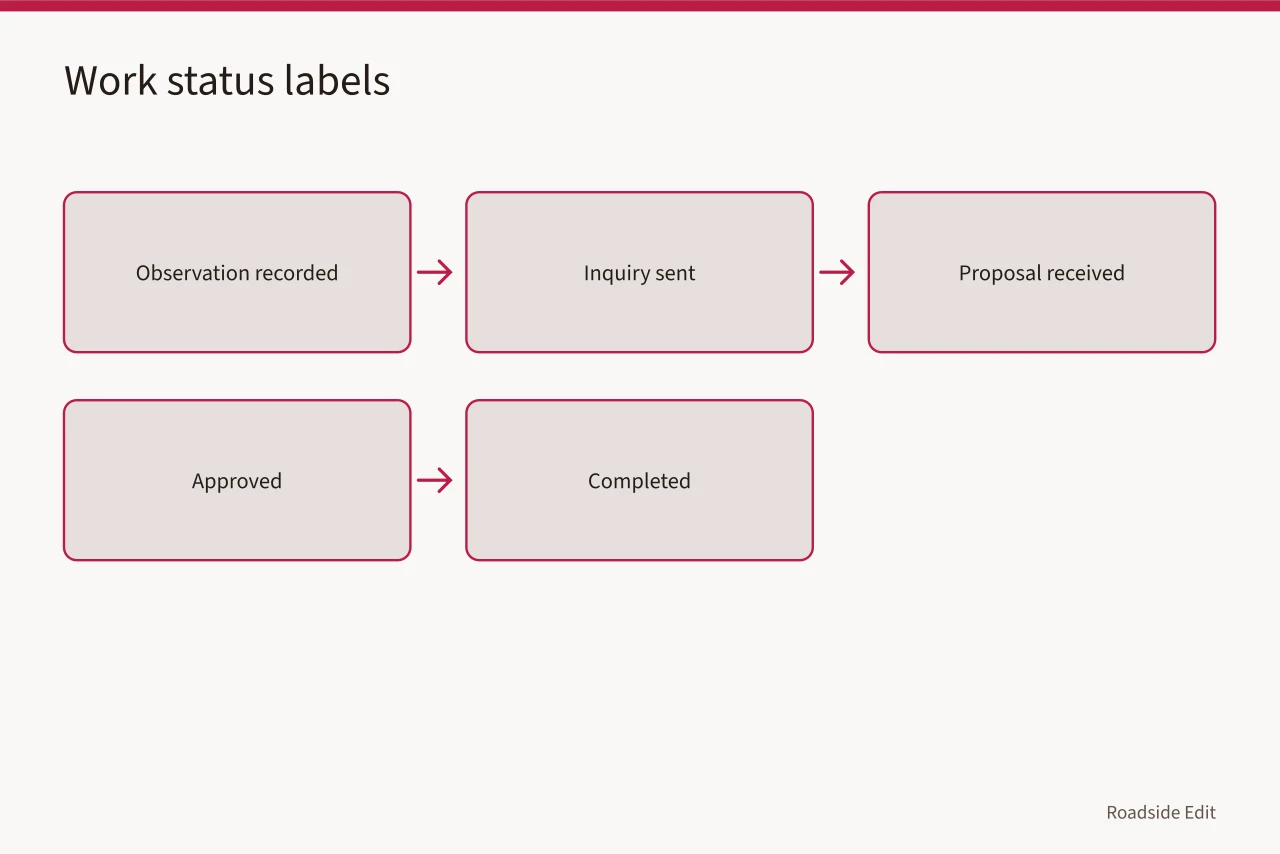
| Status | Meaning |
|---|---|
| Observation recorded | A dated fact was preserved. |
| Inquiry sent | A responsible party received a question. |
| Proposal received | A provider described a stated scope. |
| Approved | The responsible decision was recorded. |
| Completed | A dated work record exists. |
Price claims need the same restraint. A number without a named scope, date, location, access assumptions, and exclusions is not useful evidence. Do not turn a single submitted quote into a regional average or an editorial promise.
Mistake 6: mixing commercial content with evidence
Directories and paid placements can be useful if they are transparent. They are not independent confirmation that a service is appropriate, a property condition exists, or an outcome will occur. Keep sponsored content, provider claims, and submitted profiles in a clearly disclosed section. Keep factual editorial statements in a separate evidence file with the source page and check date.
That separation protects readers and businesses. A provider can describe its own service. The article should not convert that description into a claim about a specific motel without evidence and permission.
Mistake 7: publishing before checking the source
Every external link should support the sentence beside it. Link to the specific page, not a homepage. Do not repeat a link target within the article. Before publication, compare the text against the source and correct any claim that goes beyond it.
For images, confirm the catalog record, the credit, and whether the image depicts what the caption says. A photo of a historic motel can illustrate context. It does not prove the present condition of another motel or permit a property-specific assertion.
Google Street View can show past street-level imagery. Capture dates vary, and the service is not a current inspection.
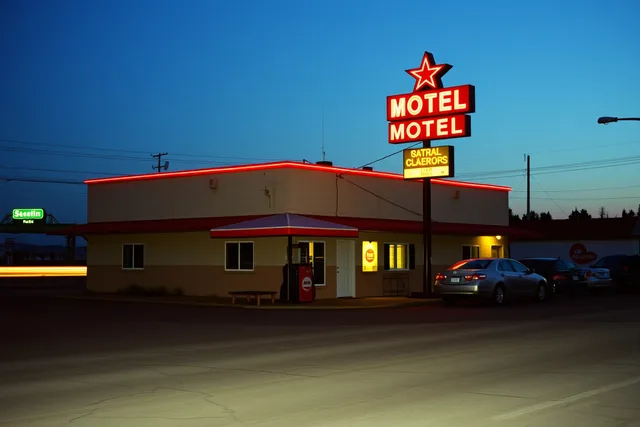
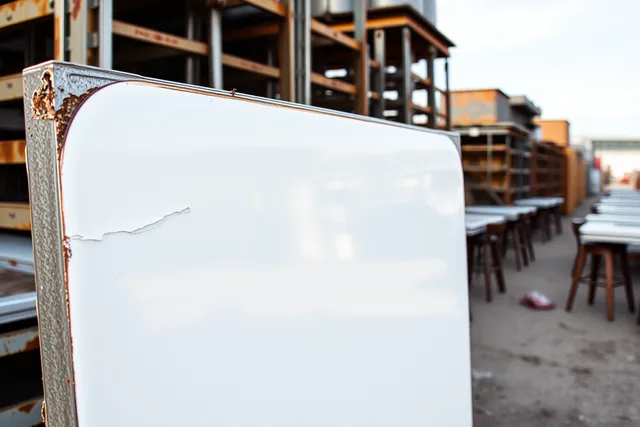
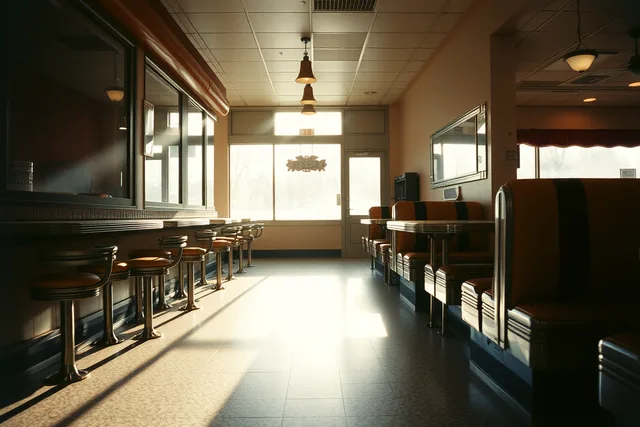
The image is illustrative. It does not establish a motel's current condition, safety, ownership, or project status.
Mistake 8: ignoring change over time and the handoff
Exterior conditions vary with weather, light, access, seasons, and site activity. An image from one day does not prove conditions on another day. Use comparable viewpoints where practical, and write down differences that affect the comparison. If rain, snow, construction, or limited light changes the view, state that fact.
The National Weather Service provides past observations and forecasts. It can help date a weather event, but it does not prove on-site damage. FEMA's Flood Map Service Center lets users find effective flood maps for a community. It is a starting point for mapped flood questions, not a site inspection.
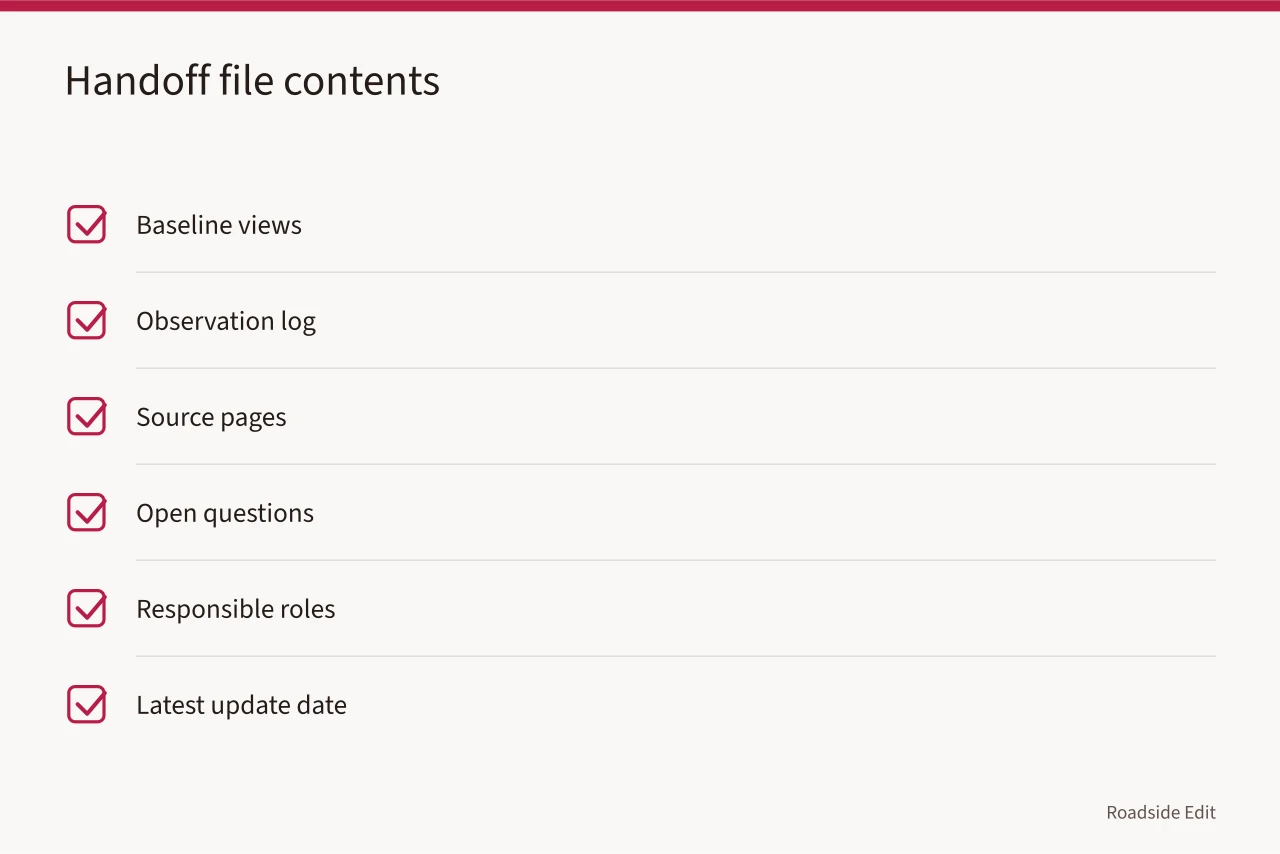
When ownership, management, editorial responsibility, or providers change, records often become scattered. A useful handoff file is small and organized. Include baseline views and the observation log. Add source pages, open questions, responsible roles, and the latest update date. Keep personal information, access details, and other sensitive material out of any public file.
Use clear boundaries. A guide may describe how an editor should organize observations, attribute sources, and disclose commercial content. It should stop short of evaluating electrical systems, structural capacity, or hazardous materials. It also should not decide code compliance, insurance questions, or specific treatment methods. Those subjects require the evidence and authority appropriate to the property.
The ADA Standards for Accessible Design are technical standards for covered facilities. Consult the ADA Standards for Accessible Design. They do not decide compliance at a particular motel. They show why an article should not label a visible route compliant or noncompliant from an image.
FEMA's National Flood Hazard Layer provides federal flood hazard information for mapped areas. Check FEMA's National Flood Hazard Layer information. It does not determine a current safety condition, damage, or project duty. It is a defined source when a record raises a mapped flood-information question.
Common questions
Can an article tell an owner which repair to choose?
No. It can explain how to document a question and direct the owner to an appropriate responsible reviewer.
What should an exterior image caption include?
Include the place or feature, viewpoint, date where known, source, and a limit on what the image can establish.
Are paid listings evidence of property condition?
No. They are commercial information and should be disclosed separately from editorial evidence.
In this guide
- Motel exterior mistakes checklist: 7 errors to catch before you publishMotel exterior mistakes checklist for 2027 helps U.S. owners avoid evidence gaps, unsafe assumptions, misleading claims, weak captions, and silent corrections.
- Motel exterior questions to ask before work starts in 2027Motel exterior questions before work in 2027 help U.S. readers define evidence, scope, access, record limits, and responsible next questions.
- How to keep motel exterior mistakes records that survive scrutinyMotel exterior mistakes records guide for 2027 helps U.S. owners retain source provenance, correction history, disclosed submissions, evidence limits, and handoffs.