Guides
Part of Neon sign restoration planning: build a project record before you set a scope
Neon sign restoration planning questions to ask before you commit
Neon sign restoration planning questions for 2027 help U.S. owners separate evidence, authority, scope, funding, and public claims before decisions are made.
The best planning questions make a record more precise. They do not instruct someone to repair a sign, decide a permit issue, or declare a technical outcome. Use these questions to separate the historical story, the owner's decision, the proposed scope, and the reviews that may be needed.
What to take away
- Ask what evidence supports a statement before deciding how to publish it.
- Ask who has authority before treating an intention as approval.
- Ask what the project excludes before comparing providers or prices.
- Flag public funding or federal involvement early instead of guessing about the process.
Questions for the evidence packet
| Question | Why it matters |
|---|---|
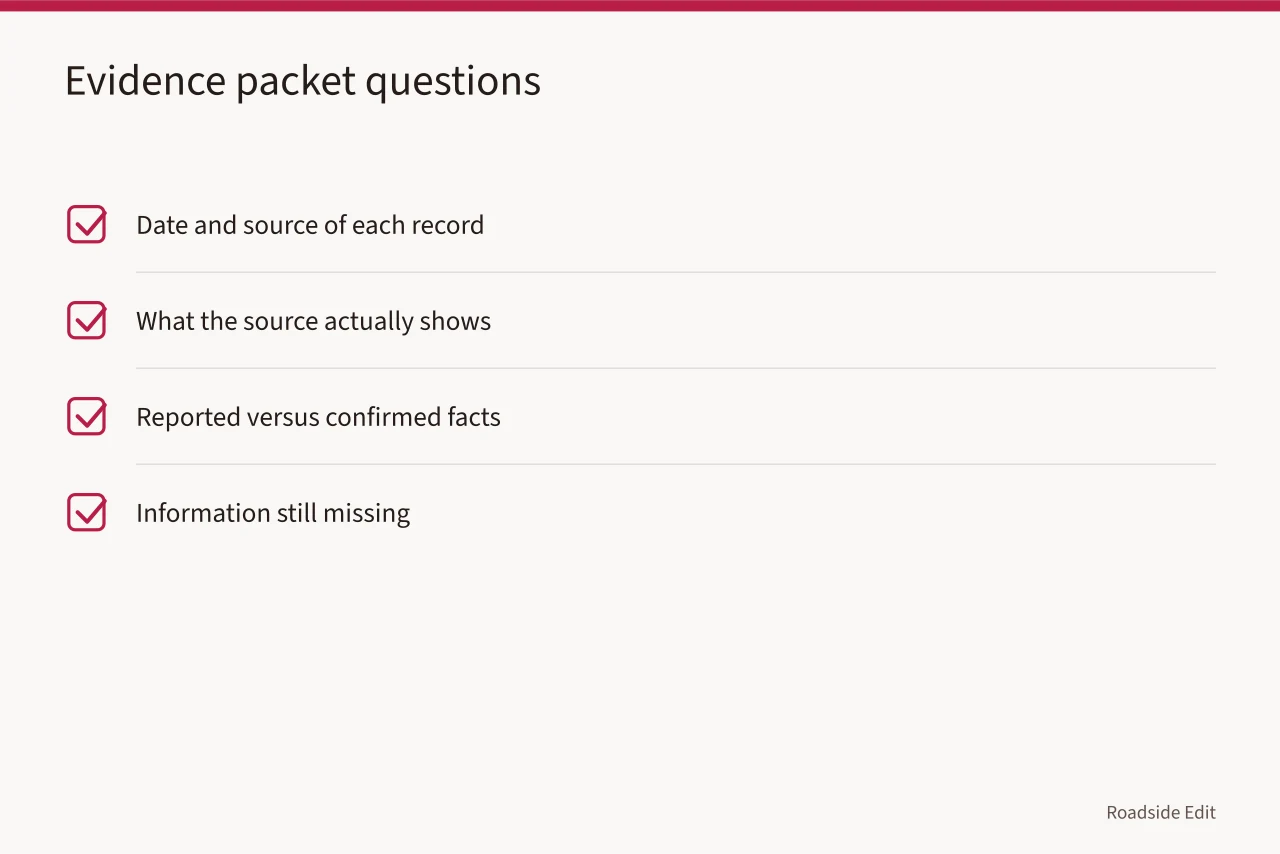
| What is the date and source of each photograph or record? | It keeps a current image from being presented as historical proof. |
| What does the source actually say or show? | It prevents a caption from becoming a larger unsupported claim. |
| Which facts are reported rather than confirmed? | It gives readers a way to understand uncertainty. |
| What information is still missing? | It makes research gaps visible to the next reviewer. |
Questions for authority and scope
Ask who owns the property, who can commission a study, and who can approve publication of supplied materials. Then ask whether the proposed assignment is research, documentation, a public article, a professional assessment, a grant application, or another defined task. If the answer blends several activities, break it apart.
Where federal funding, federal permits, federal property, or other federal action may be involved, do not promise whether a specific review applies.
The Advisory Council on Historic Preservation explains that some project-planning activities can raise Section 106 timing questions. That page covers a federal process, not a determination for any particular neon sign.
Use a responsible agency or qualified adviser for the actual facts.
Questions for records and handoff
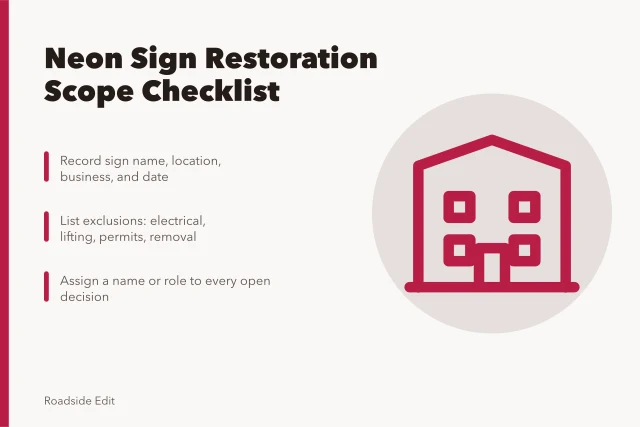
Before passing the planning file to another person, ask whether it includes a dated brief, source register, image credits, role map, list of exclusions, and open-question log. Ask which version of the brief each contributor answered. A handoff is weak when the next reviewer cannot tell whether a source supports a fact, a proposal, or an unconfirmed lead.
The National Archives guidance on agency recordkeeping explains federal responsibilities for records that document activities and decisions. It does not establish a private neon-project system. It supports keeping the dated record that explains a material decision, assumption, or correction.
For historic-source material, ask whether the article identifies the record's origin, date, and scope. The National Park Service documentation standards and guidelines address recording historic properties. They do not determine the history or treatment of a particular sign. They support a source description that does not extend a record beyond what it documents.
Questions for public-facing content
- Is the business, provider, or sponsor relationship disclosed in plain language?
- Does a headline claim more than the documents can support?
- Are before-and-after images dated and accurately captioned?
- Is a quote attributed to the person who made it?
- Could a reader mistake a directory entry for a site-specific recommendation?
These questions help a magazine, directory, or listicle remain useful to both readers and prospective placement customers. A transparent feature can describe a company's work and paid relationship without adopting its marketing language as an independently proven conclusion.
The Federal Trade Commission's endorsement guides address endorsements and testimonials in advertising. They are not preservation-planning guidance. They are relevant when a planned article includes paid placement, a testimonial, or another commercial relationship that readers may need to evaluate.
Questions at the decision date
Ask which question has been answered, which remains open, who owns the next action, and what source or authority is needed before a public statement changes. This last pass helps the team distinguish a project plan from a completed result and an intended relationship from an approved public claim.
Common questions
Does an unanswered question stop all planning?
No. It should be logged and assigned to the person or process that can answer it. The key is not to publish an assumption as a settled fact.
Can a provider answer historical questions?
A provider may share its experience or records, but an article should identify that source and avoid treating it as conclusive evidence without support.
Are these questions legal advice?
No. They are editorial and planning prompts. Legal, permit, and federal-review questions depend on the specific property and project.