Guides
Part of How to run a modern roadside design case study method for 2027 records
Before you file: questions for a modern roadside design case study
Roadside case study questions for 2027 help U.S. writers test source dates, place context, roles, evidence limits, and whether a claim can be supported fairly.
These questions help a writer test a case-study claim before it becomes a public assertion. They are intended to expose missing evidence, not to create an authoritative finding about a real place or project.
What to take away
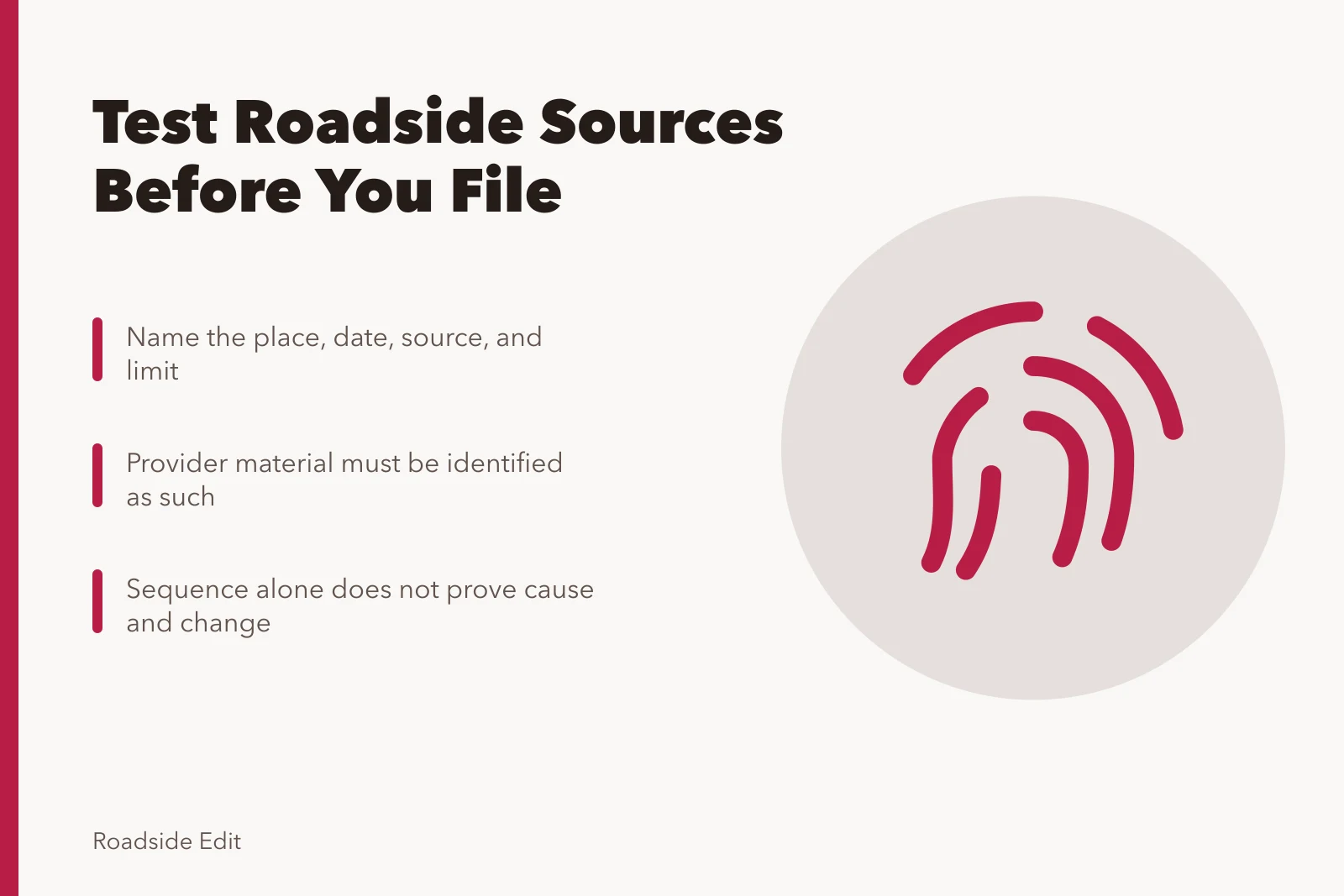
- A useful question names the place, date, source, and limit.
- Photographs need context before they support a statement.
- Provider material should be identified as such.
- Open questions are better than unsupported conclusions.
Questions about source fit
Ask these questions as you collect material:
- What does this item directly show or state?
- When was it created, and is that date relevant to the article's claim?
- Does it identify the correct place, feature, person, or version of the project?
- Who created it, and what was their role?
- What claim would go beyond the evidence?
The National Park Service explains that the Historic American Buildings Survey was created to record architectural heritage and make documentation available for public benefit. Its HABS overview is not a general publication rule. It supports the limited principle that documentation should preserve information rather than substitute a broad interpretation for the record.
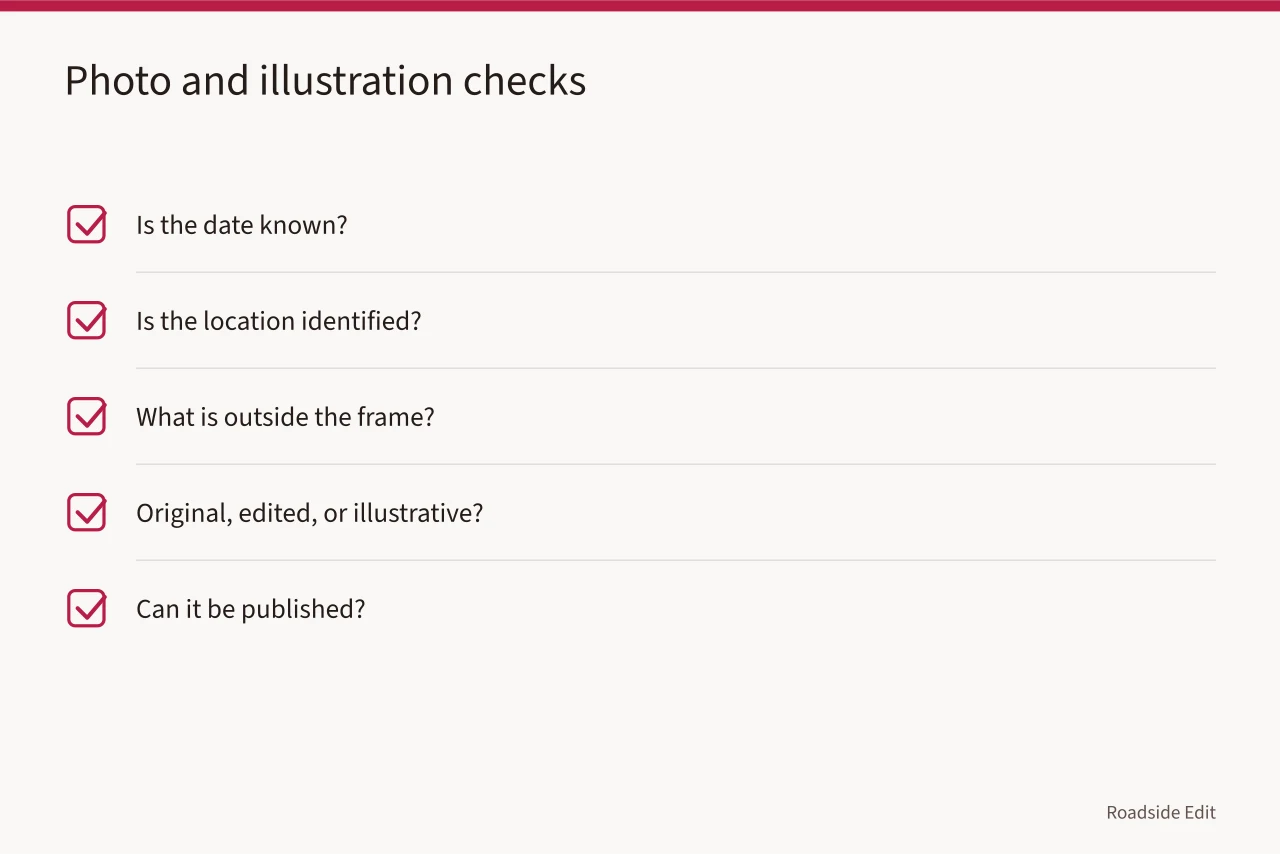
Questions about photographs and illustrations
| Question | Reason for asking |
|---|---|
| Is the date known? | Appearance may change over time. |
| Is the location identified? | A similar-looking place is not evidence about this site. |
| What is outside the frame? | The image may omit relevant context. |
| Is it original, edited, or illustrative? | Readers need to understand its role. |
| Can it be published? | Possession does not establish reuse rights. |
Do not use an image merely because it supports a narrative mood. If it is illustrative, say so. If it is project documentation, state which aspect it shows and avoid assigning it a conclusion it cannot bear.
Questions about cause and change
Case studies often turn sequence into cause. A new sign may appear before a visitor comment, or a repair may occur before a business reports a change. Those facts do not by themselves show that one event caused the other. Ask what was measured, who recorded it, what period is covered, and what other change could explain the result.
The National Archives guidance on agency recordkeeping explains federal requirements for documenting activities and decisions. It does not set a research standard for a private article. It supports keeping the underlying record for a statement about what was decided, by whom, and when.
Use these questions before describing an outcome.
- Is the source describing an action, an observation, or a measured result?
- Does it cover the same date range as the claimed effect?
- Could another event explain the reported change?
- Does the source name the method used to collect the information?
- Would a careful reader mistake this description for a guarantee?
If the available evidence only shows a decision or a change in appearance, say that. A transparent limitation is more useful than a confident conclusion with no documented basis.
Questions about paid material and attribution
Ask whether a source was prepared by an owner, provider, sponsor, agency, or independent writer. That identification does not make the source unusable. It tells the reader what kind of statement it is. A provider may accurately describe its own service. The article should not turn that description into independent proof without other support.
The Federal Trade Commission's endorsement guides address endorsements and testimonials in advertising. They are not an article-writing template. They are relevant when a case study includes a paid relationship, testimonial, or endorsement that readers may need to evaluate.
Questions before the final edit
Read the completed draft line by line, then mark every factual claim, and for each claim identify its exact source, date, role, and limit.
If a source only gives background, rewrite that sentence as background. If a source supports no published sentence, remove it from the packet. This final pass makes the source register match the article that readers receive.
The National Park Service documentation standards and guidelines concern the recording of historic properties, not general editorial review. They offer a helpful question for a study that uses historic material: does the article identify which record supports the description and avoid extending that record beyond its documented scope?
Questions about decisions and outcomes
Ask who made the decision, what alternatives were considered, and which record explains the choice. Then ask whether the article has enough evidence to describe an outcome. A recorded decision is not automatically a measured result. If no outcome evidence is available, the article can still explain the process and state the missing data.
Common questions
What should I do when a source is incomplete?
State the limit, seek an original or current record where appropriate, and avoid using the source for a broader claim.
Can a quote establish a project outcome?
It establishes that the speaker made the statement. It does not independently verify the outcome.
Why identify the creator of a source?
Creator and role help readers understand the source's perspective, access, and possible limitations.