Guides
How to compare roadside design studio options before you sign
Roadside design studio options compared for 2027 explains how to set fair criteria, preserve uncertainty, screen concepts, and record a defensible choice.
When a roadside place needs attention, it is tempting to compare ideas by appearance alone. A fresh facade, a new sign, a repair-first approach, a public-facing studio, or a research phase can all look promising in a sketch. They are not interchangeable choices. Each has a different purpose, evidence base, time horizon, and set of unanswered questions.
This is a practical editorial framework for comparing early options around a U.S. roadside place. It is not a design approval, engineering opinion, preservation determination, funding decision, permit review, or construction recommendation.
What to take away
- Compare options against a stated need, not a favorite image.
- Give every option the same baseline facts and the same decision criteria.
- Keep a no-action or maintain-as-is baseline visible where it is relevant.
- Separate an attractive concept from an option that has enough evidence to advance.
- Record why an option was screened out, changed, or carried forward.
Start with the decision, not the deliverable
An options comparison works only when the decision is clear. "Choose a better roadside design" is too broad to evaluate. "Decide whether to research, stabilize, reinterpret, or redesign the entrance in the next planning phase" gives the group a question it can answer.
Name the decision owner, area considered, time period, comparison limits.
A storefront owner may be deciding how to commission an early study, a local group may be deciding how to document a historic sign, and a public agency may have formal responsibilities a private editor lacks. Do not describe an informal comparison as if it were a government finding.
The U.S. Environmental Protection Agency describes alternatives analysis as a way to examine a range of choices against consistent criteria, including multiple long-term considerations. EPA's alternatives-analysis overview supports the basic discipline of making criteria explicit. It does not approve any particular roadside option or require a local project to use a particular scoring method.
Define the baseline before scoring ideas
The baseline is the documented present condition against which the options will be read. It may be a current use, a maintenance-only approach, a no-build condition, or an existing circulation pattern. It is not a punishment option. Without it, a comparison can quietly treat every proposed change as an improvement.
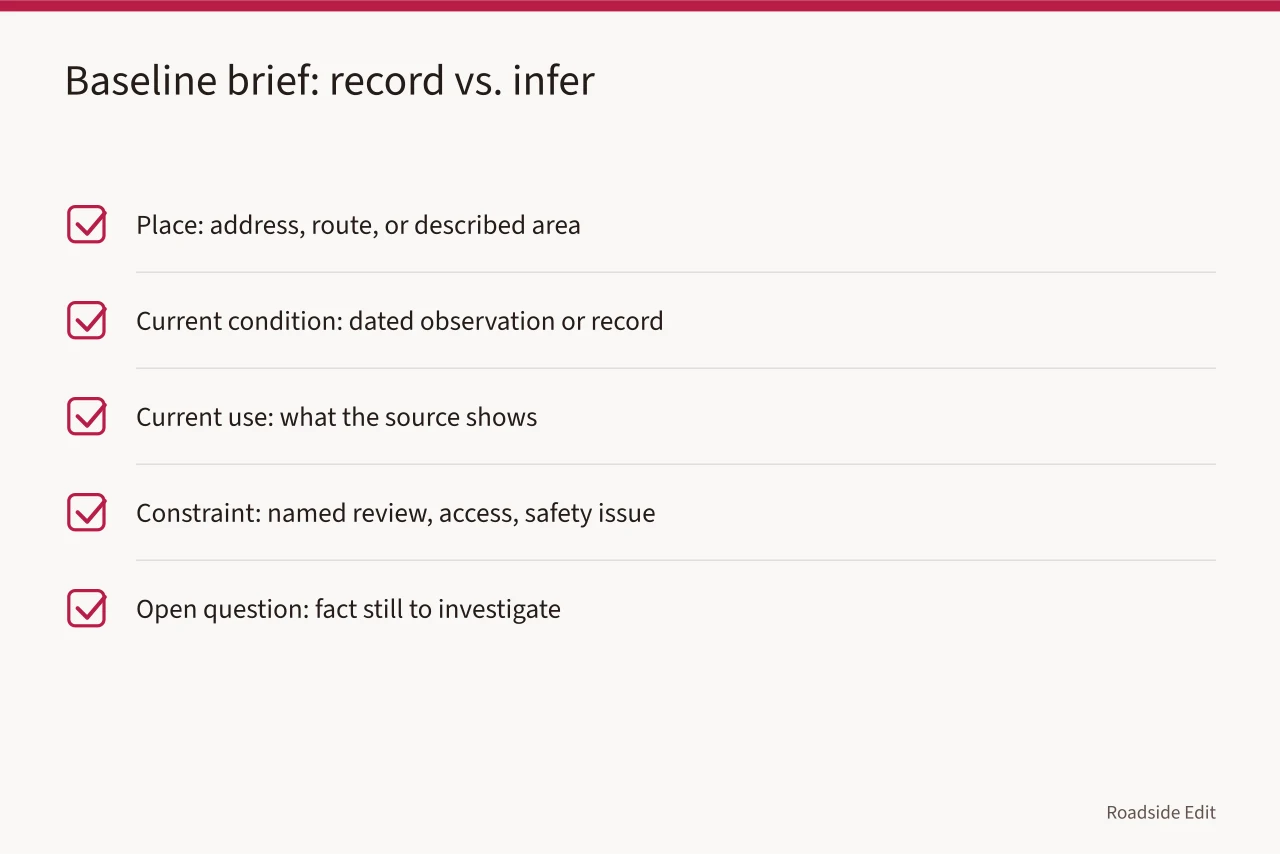
Build a short baseline brief with only supportable facts:
| Baseline item | Useful record | Do not infer |
|---|---|---|
| Place | Address, route, or clearly described area | Ownership or access rights |
| Current condition | Dated observation or reliable record | Hidden conditions |
| Current use | What the source actually shows | A future business plan |
| Constraint | Named review, access, or safety issue | A permit outcome |
| Open question | Fact still to be investigated | A settled answer |
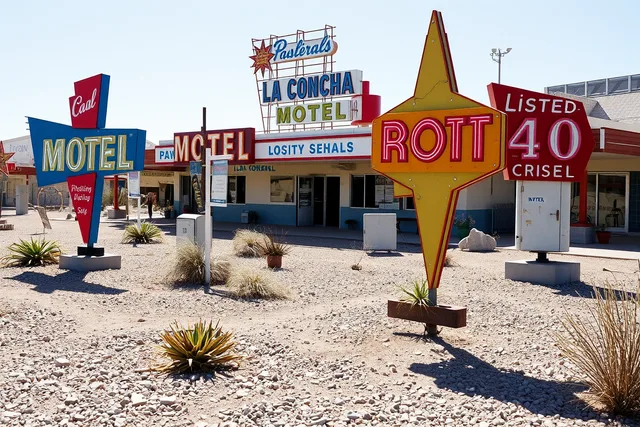
Photographs are evidence of a moment, not a complete site survey. A vintage roadside image may show character, lettering, materials, or setting. It cannot by itself prove the current condition, structural performance, code status, or feasibility of a proposed change. Put the date and source beside the observation.
Build options that answer the same problem
Give every option a one-sentence job. For example: preserve the existing sign while researching its history; test a new wayfinding layout; conduct a short design studio before selecting physical work; or maintain the present condition while gathering missing evidence. The wording matters because it keeps one option from being a detailed proposal while another is only a mood.
Do not combine unrelated actions into a single attractive bundle. "Repair the facade, launch an event series, add accessible access, change the parking layout, and secure sponsorship" is not one option. It is several decisions with different decision makers and evidence needs. Break it into components or say that the option is preliminary.
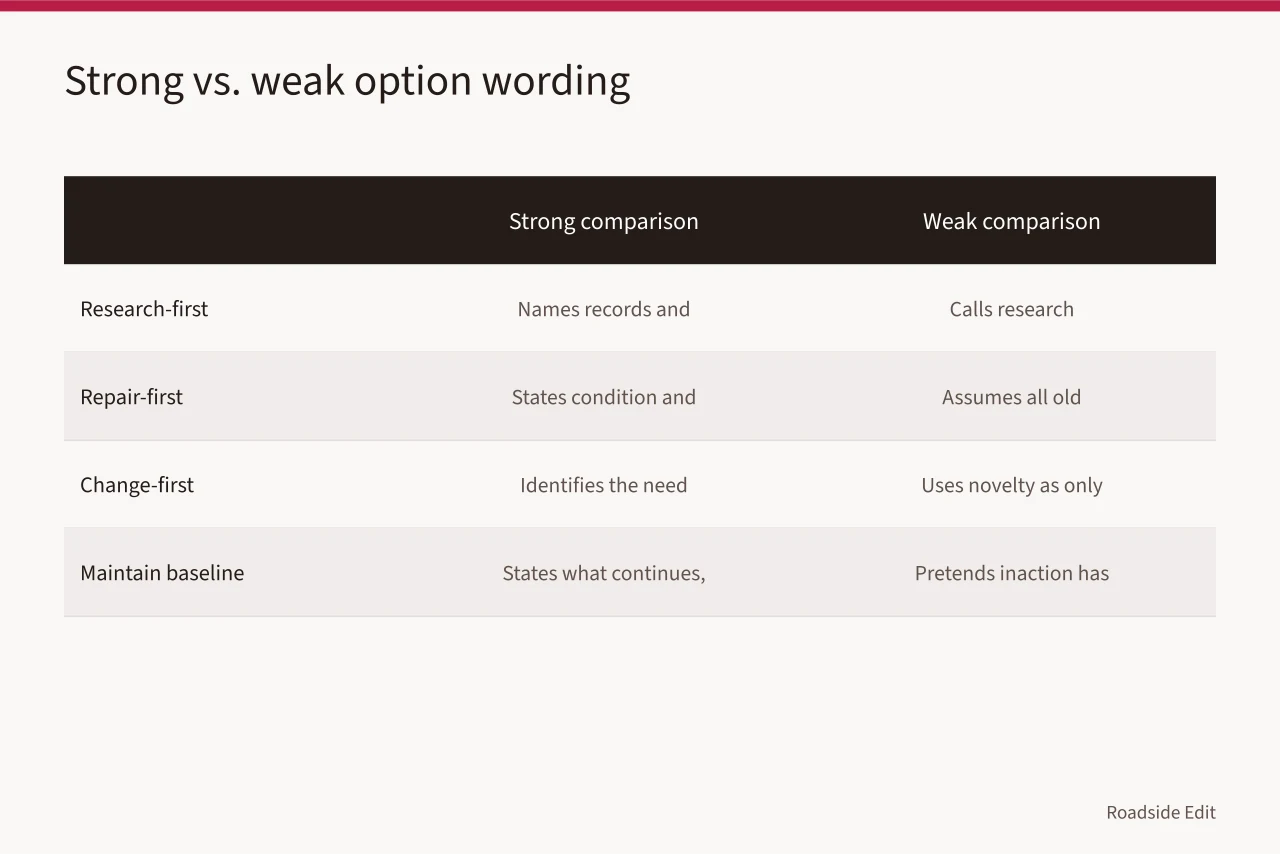
| Option description | Strong comparison form | Weak comparison form |
|---|---|---|
| Research-first | Names records and questions to resolve | Calls research unnecessary |
| Repair-first | States condition and treatment boundary | Assumes every old element should remain |
| Change-first | Identifies the need the change addresses | Uses novelty as the only measure |
| Maintain baseline | States what continues and what is deferred | Pretends inaction has no consequences |
Use criteria that the reader can inspect
Criteria are the questions applied to every option. They should come from the stated need and the available evidence, not from a preferred answer. Early criteria often include fit with purpose, evidence available, effect on significant features, access and safety questions, operating demands, likely approvals, public understanding, reversibility, and next research required.
Avoid false precision. A weighted score can help if the team defines the scale and records the reasons for weights, but it can also hide judgment behind arithmetic.
If evidence is thin, use plain-language findings: "information missing," "possible conflict," "requires specialist review," or "can be explored at concept level." A score should summarize evidence, not replace it.
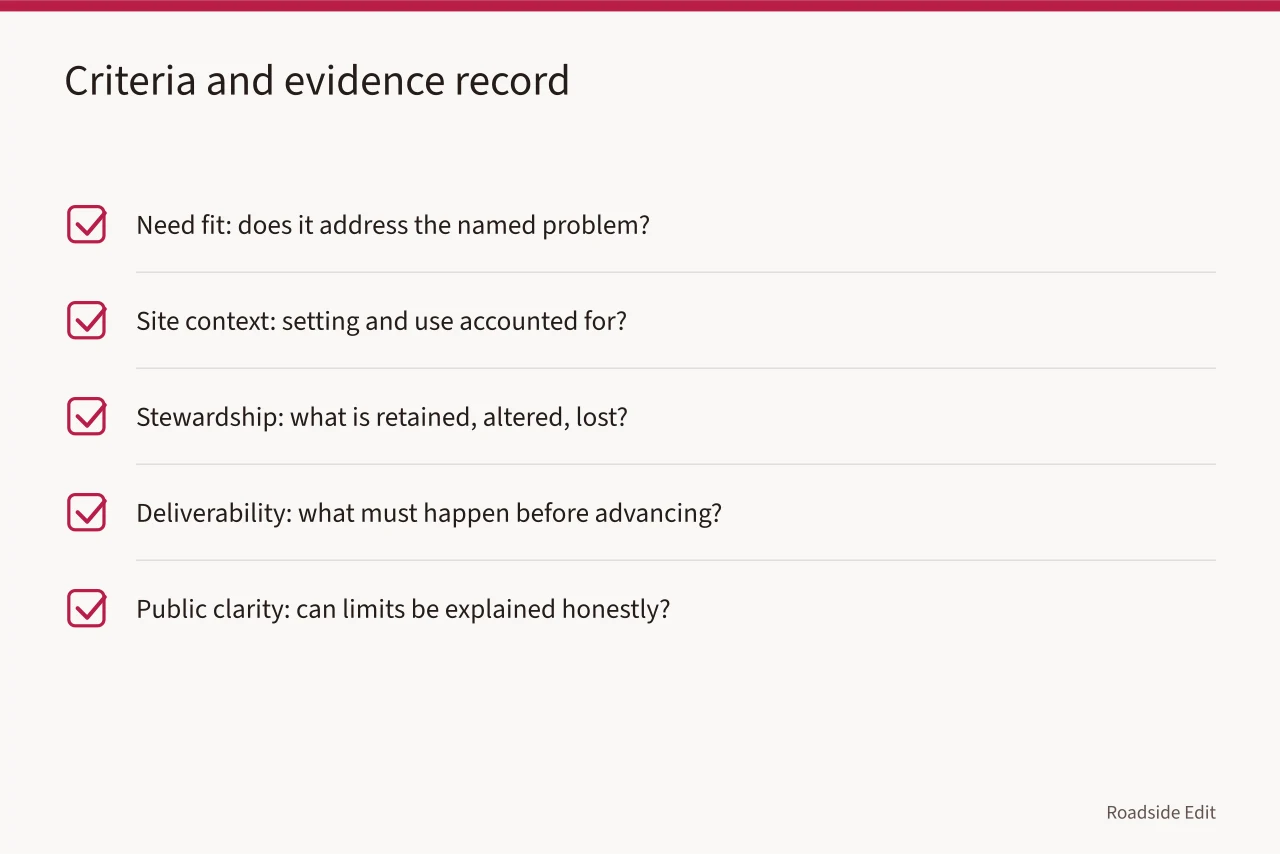
| Criterion | Question to ask | Evidence that belongs in the record |
|---|---|---|
| Need fit | Does it address the named problem? | Purpose statement and conditions |
| Site context | Does it account for setting and use? | Dated observation and local records |
| Stewardship | What would be retained, altered, or lost? | Documented features and history |
| Deliverability | What must happen before it can advance? | Required studies and decisions |
| Public clarity | Can its limits be explained honestly? | Plain-language option description |
Screen in stages
Early screening should be broad and honest. It can identify options that clearly do not address the purpose, depend on unavailable access, conflict with known facts, or need more information before any comparison is fair. It should not claim a complete technical review that has not happened.
A second stage can examine the smaller set of options in more detail. At that point, record the assumption, the evidence used, the remaining uncertainty, and the person or organization responsible for the next decision. A good comparison narrows what needs deeper work. It does not manufacture a final selection because a deadline is approaching.
Use a separate line for an option eliminated for lack of information. "Not selected" and "cannot yet be evaluated" are different findings. The first is a decision; the second is a research task.
Distinguish tradeoffs from defects
Most plausible options have tradeoffs. A research-first approach may protect against a premature decision but take longer. A reversible interpretation may be lighter on the place but less visible. A larger change may answer an operating need while raising more review, condition, and context questions. State those tensions directly.
Do not call a tradeoff a defect simply because it favors a competing idea. Likewise, do not hide a tradeoff in a footnote. Readers should be able to see what the option gains, what it risks, and what it leaves unresolved.
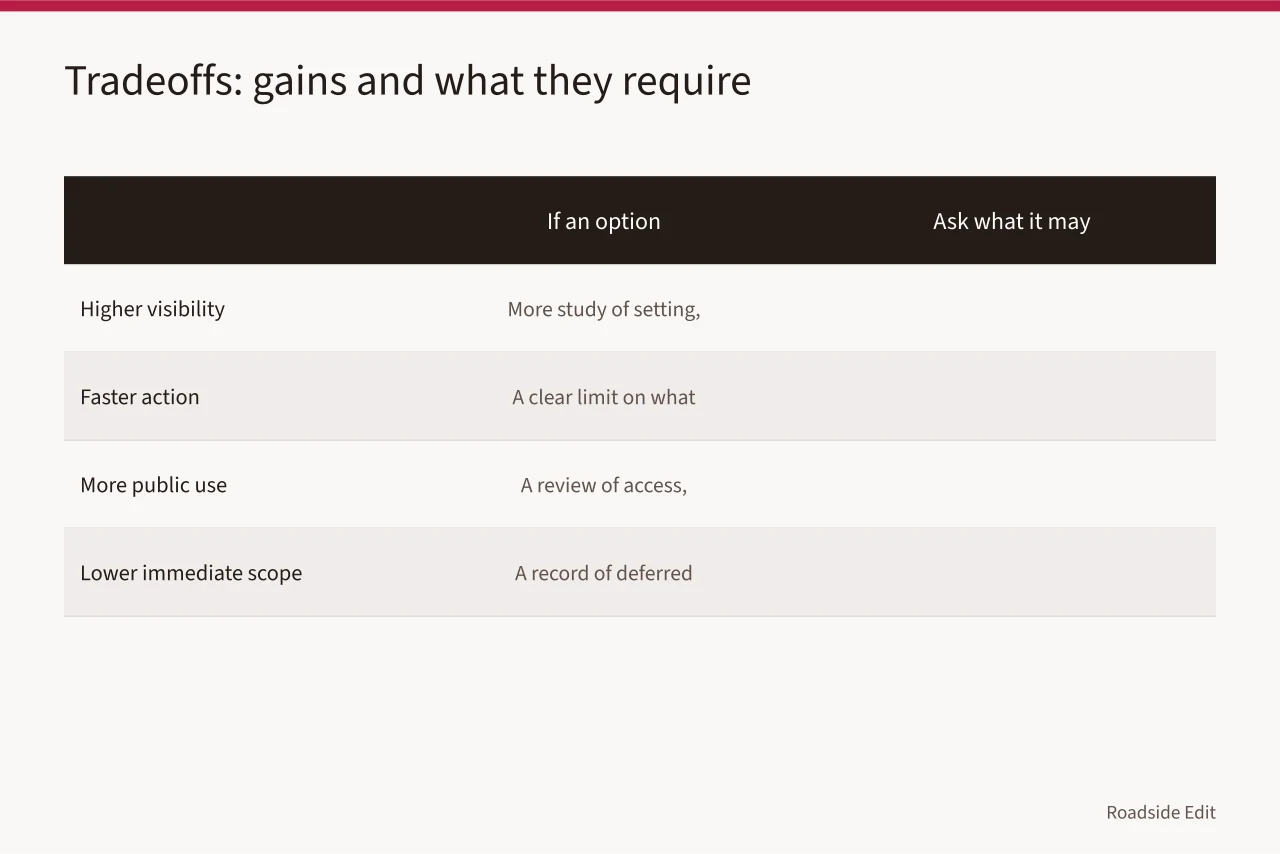
| If an option gains... | Ask what it may require... |
|---|---|
| Higher visibility | More study of setting, sign rules, and operations |
| Faster action | A clear limit on what has not been investigated |
| More public use | A review of access, stewardship, and ongoing care |
| Lower immediate scope | A record of deferred work and its implications |
Record the comparison so it can be revisited
The comparison record should preserve the version date, options considered, sources reviewed, criteria, assumptions, unanswered questions, contributors, and the reason an option was advanced, changed, deferred, or eliminated. Keep direct quotations separate from editorial conclusions. Mark a claim as a proposal when it is a proposal.
This record is especially important when a change may affect a historic place. Later readers need to know why an option was rejected: failed the stated need, lacked evidence, exceeded the study boundary, raised an unresolved concern, or belonged to a future phase.
A tidy final deck without that history is less useful than a short, dated decision note.
What a comparison cannot prove
An article can describe choices and ask careful questions. It cannot certify structural soundness, determine legal compliance, predict a permit decision, establish eligibility for a program, or promise an economic result. A published listicle should label sponsored or paid placements, separate them from editorial criteria, and avoid turning a business claim into a verdict.
The most useful outcome may be a smaller one: a better brief for the next conversation. That outcome is legitimate when it identifies what is known, what matters, and what must be confirmed before physical work is chosen.
Before the next meeting, circulate the comparison record rather than only its conclusion. Invite reviewers to identify an incorrect observation, an omitted option, or a criterion that does not fit the stated need. Capture those responses with dates and names. That small review step makes the next version more transparent without turning preliminary ideas into promises.
The Federal Highway Administration transportation decisionmaking guidance supports documenting screening criteria and decisions. The National Park Service treatment standards distinguish treatment approaches. The National Archives records-management guide supports keeping a dated option record.
Common questions
Should every option have a numeric score?
No. Use a score only when the evidence, scale, and weights can be explained. Plain-language findings are often more honest during early planning.
Is the cheapest-looking option automatically the best option?
No. A comparison should not confuse a narrow immediate scope with total cost, condition, stewardship, or long-term operating needs.
Can a comparison article select an option for a property owner?
No. It can organize evidence and tradeoffs, but the appropriate decision maker must make the decision.
In this guide
- How to compare roadside design studio options before you price anythingRoadside design studio option budget notes for 2027 compare evidence, scope, timing, research needs, and cost stages without ranking unpriced concepts.