Guides
Part of How to build a neon sign restoration guide around regional climate and records
How to build a 2027 neon sign restoration regional research checklist
A 2027 neon sign restoration research checklist sorts sources by authority, date and claim limit before any regional finding reaches public copy.
A porcelain-enamel station sign and a 1960s plastic-faced box sign fail differently, and no regional dataset knows which one you are standing in front of. The checklist below keeps every source inside the claim it can actually carry.
What to take away
- Give each source one job: location frame, authority, claim limit, date, next question.
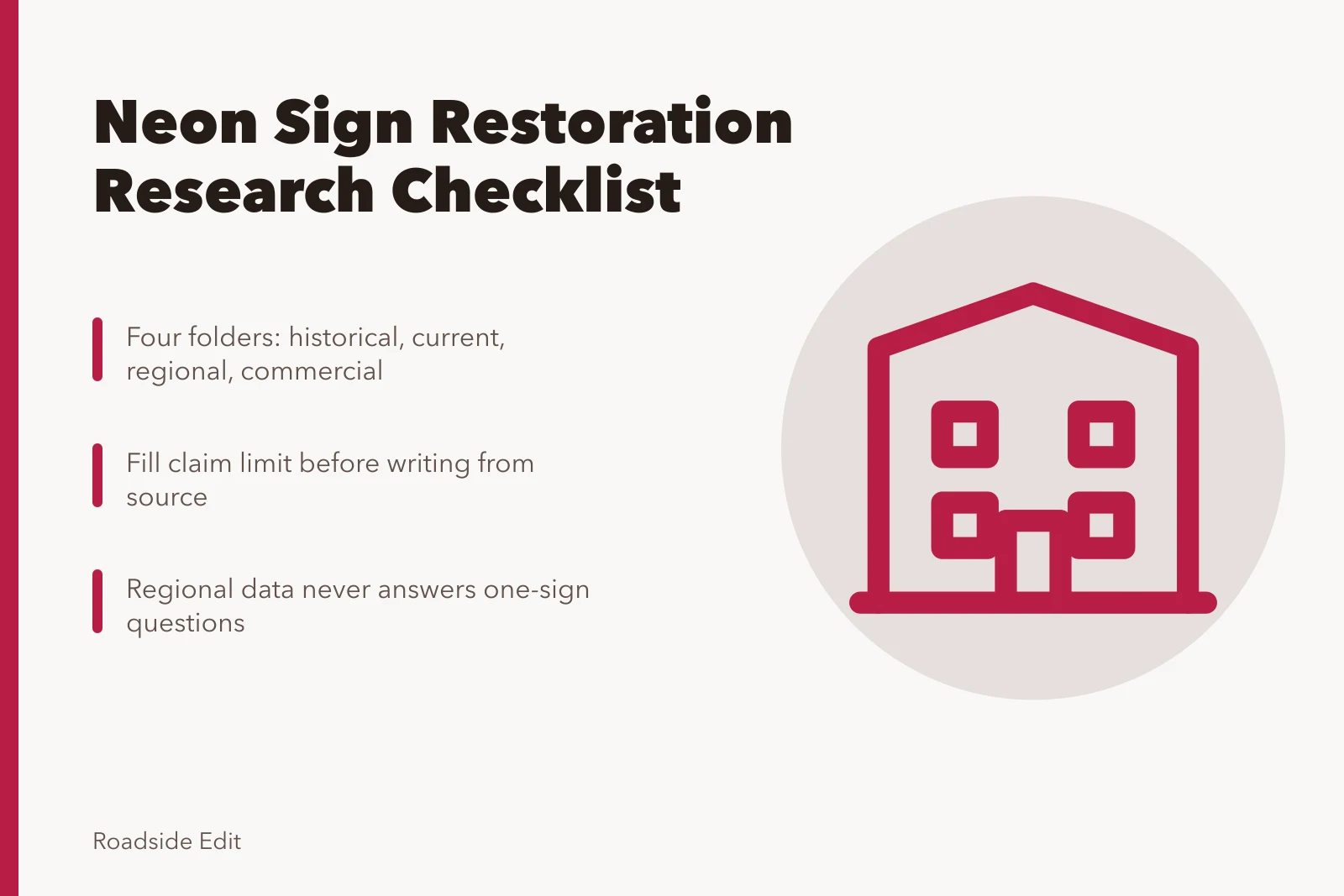
- File sources in four folders: historical, current, regional, commercial.
- Never let a regional map or corridor study answer a question about one sign.
- Label illustrative images as illustrative, with the item record and rights note attached.
- Name the authority that decides a physical, legal or eligibility question, and leave it open until they answer.
The source checklist
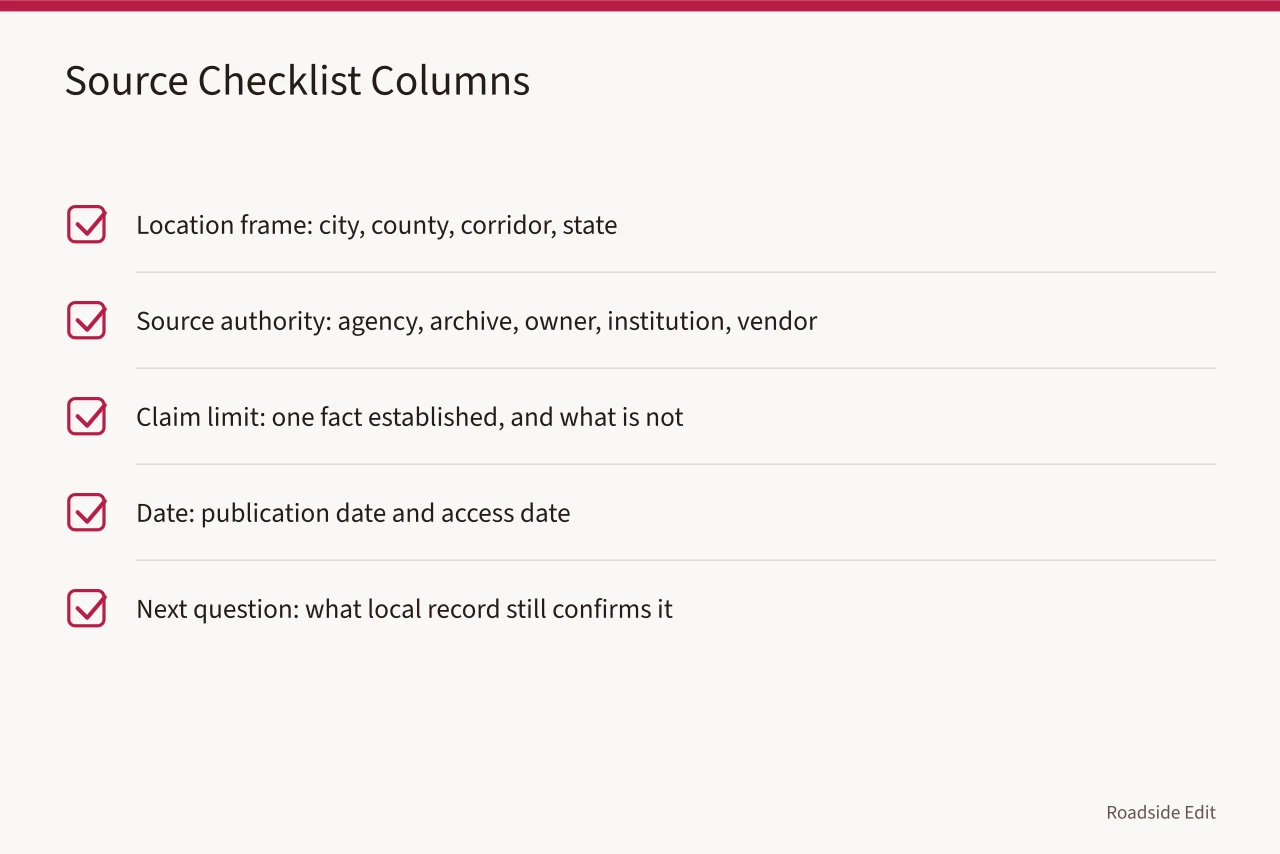
| Location frame | Source authority | Claim limit | Date | Next question |
|---|---|---|---|---|
| City, county, corridor, state | Agency, archive, owner, institution, vendor | The one fact this source establishes, and what it does not | Publication date and access date | What local record still has to confirm it |
Fill the claim limit column before you write a sentence from the source. A state historic preservation office survey says a corridor held eleven canopy-front stations in 1965. It does not say the canopy on your subject property is original enamel rather than a later repaint, and the checklist should show that gap in writing.
The four-folder filing system
Keep four folders, physical or digital, and put nothing in two of them.
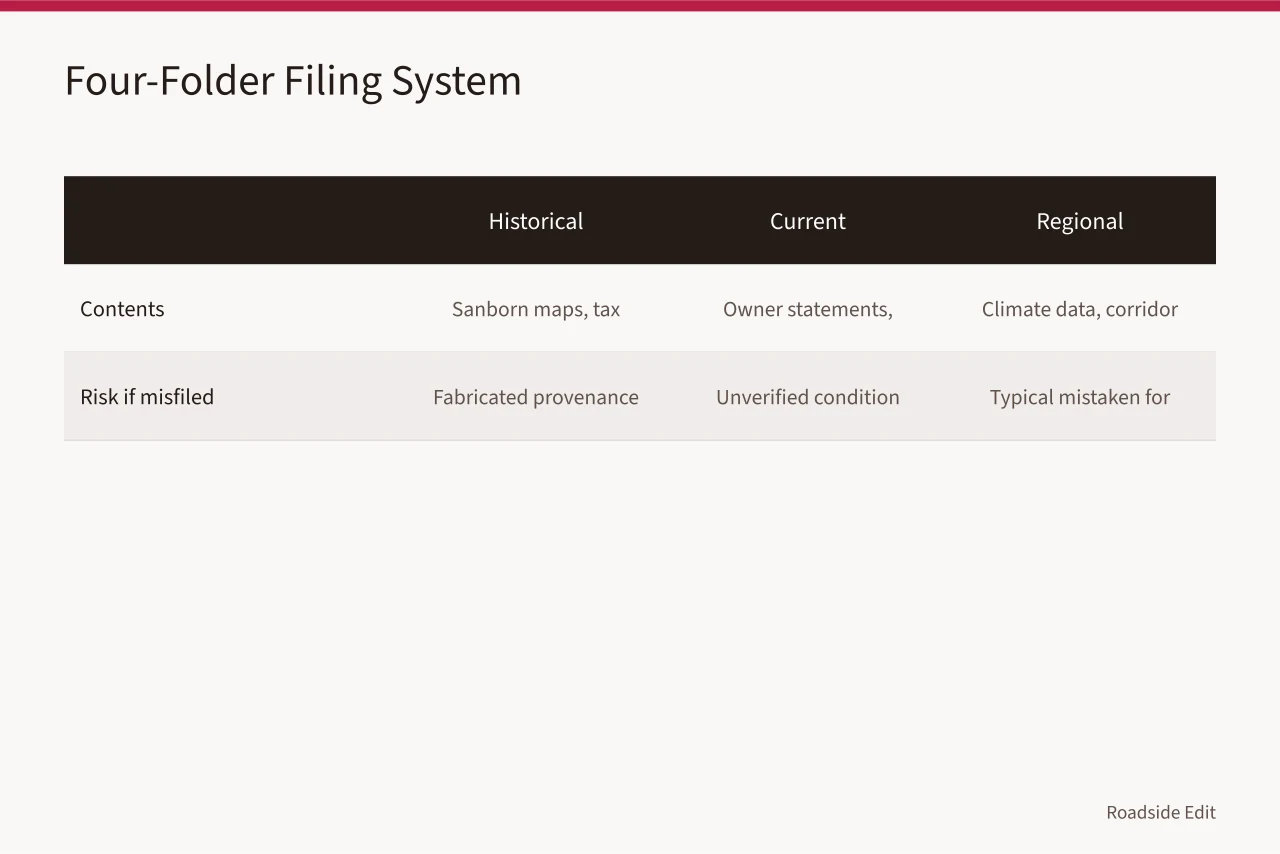
When a correction comes in, the folder tells you what else the source touched. A vendor sheet misfiled as historical evidence is the most common way a fabricated provenance claim enters a restoration write-up.
Match the source to the material question
Dating a motel exterior by brick veneer, curtain-wall glazing or a butterfly roof needs a different record than dating a neon tube by diameter and transformer load. The first lives in tax photographs and building permits. The second lives in sign shop invoices, tube diameter measurements and the transformer nameplate.
The National Park Service documentation standards and guidelines govern how a historic property gets recorded. They do not decide treatment, and they do not settle eligibility. Treatment questions go to your state historic preservation office under the adopted ordinance, and Section 106 review applies only where a federal undertaking triggers it.
Keep regional data regional
The National Centers for Environmental Information publishes a Climate Atlas for data-informed decisions and notes the value of local observations for site-specific detail. Useful for corrosion context on a coastal forecourt. Not a condition report, and not evidence about one canopy soffit or dry-stand pipe.
Apply the same limit to every regional source. A corridor study can tell you what was typical. Only a dated field survey, a permit or an owner record tells you what is there.
Check the image record before you run it
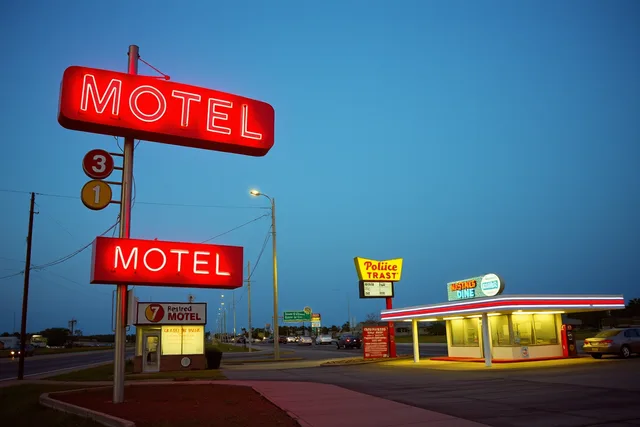
An image from a neighboring town or a state collection adds context. It does not carry the history, condition or ownership of the sign in your article.
Record the item source, stated location, date, rights note and why it appears. Label it illustrative when it is not local evidence. The Library of Congress Prints and Photographs collections publish descriptive and rights information with each item, which is exactly the material you need to check place and context before publication.
Attribute service areas and sponsorships
A vendor can accurately describe where it works. A directory entry is not proof it touched a particular sign or holds any relationship with a town.
Record where a service-area claim came from and mark sponsored or vendor-supplied entries as such. The Federal Trade Commission's endorsement guides cover endorsements and testimonials in advertising, which is the disclosure standard that applies when a commercial description runs beside editorial content. If a claim cannot be checked, narrow it or cut it.
Worked example: a 1950s porcelain-enamel station sign
Say a reader asks whether a station sign on a Route 66 alignment is original. The regional folder holds a corridor survey placing the station type in the right decade. The historical folder holds a 1958 tax photograph showing the sign in place. The current folder holds nothing.
The checklist row reads: claim limit, sign present in 1958, material and repaint history unestablished; next question, whether the enamel face was over-painted, which only a hands-on examination by a qualified conservator answers.
Publish the 1958 photograph, state the limit, and leave the material question open.
Over-painting original enamel destroys the finish a buyer or a nomination reviewer is looking for, so the open question is worth more than a confident guess.
For the question set that feeds this checklist, see regional research questions, and for the property records that supply the historical folder, see roadside building records. Where a plan depends on the physical scope, planning questions come before any public claim.
Common questions
Can a regional map be the only source for a local feature?
No. It supplies context. A local feature also needs location-appropriate records, and any unresolved detail stays stated as unresolved.
What is the safest way to describe an unknown condition?
Describe what is documented, name the source, and write the question that needs a local answer. Do not fill the gap with a guess.
Who decides whether a sign is eligible for listing?
Your state historic preservation office or local landmarks commission, against the National Register criteria and the adopted ordinance. A research checklist organizes evidence for that review. It does not make the finding.