Guides
Part of Roadside building provider selection: how to compare scope before price in 2027
Roadside building hiring questions to ask before you sign
Roadside building hiring questions for 2027 give U.S. readers a clear way to compare scope, records, safety, access, and project handoffs without endorsements.
Hiring help for a roadside building begins with a question that is often skipped: what problem needs to be solved? A reader may need historical research, a site visit, design work, a contractor, a code review, or current visitor information. Those are not interchangeable services. A useful hiring conversation separates them before anyone compares price, portfolio images, or marketing claims.
What to take away
- Ask every candidate for a written scope, deliverable, schedule, and exclusion list.
- Match the person or firm to the actual task, not to the most attractive portfolio.
- Keep safety, access, historical research, and physical work as separate questions.
- Treat a directory profile or paid listing as an attributed introduction, not a recommendation.
Ask what the provider will actually do
The first written question should be: "What work will you perform, and what will I receive at the end?" A proposal can sound complete while leaving research, approvals, site investigation, drawings, permits, or physical work outside the scope. There is no universally correct package. There is only a clear or unclear one.
| Question | Why it matters | A useful written answer names |
|---|
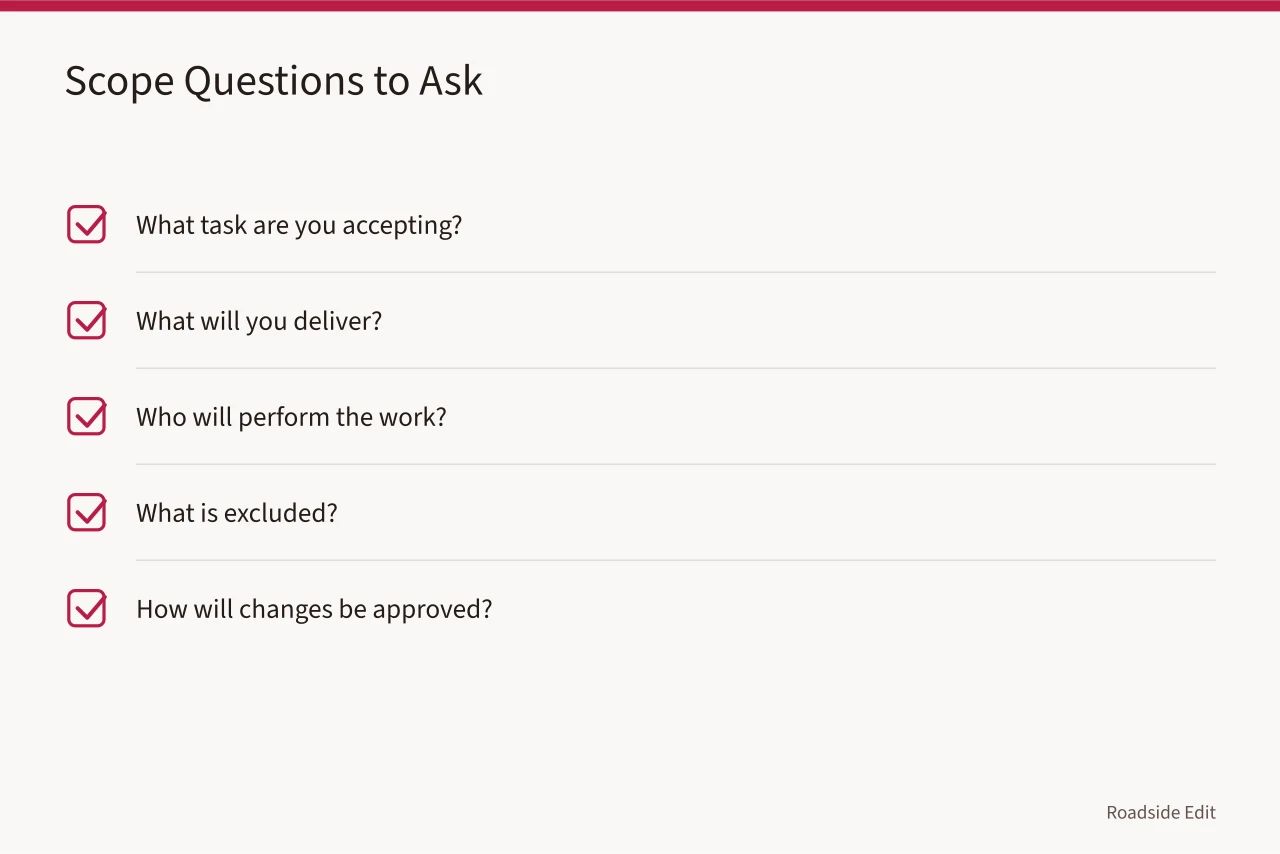
The National Park Service's preservation technology programs cover different areas of work, including architecture and engineering, materials conservation, and technical services. Review the NPS preservation technology program areas. That does not qualify a particular provider. It does show why a reader should ask what expertise the assignment requires instead of assuming that every preservation-related service has the same role.
Ask for property-specific records before a promise
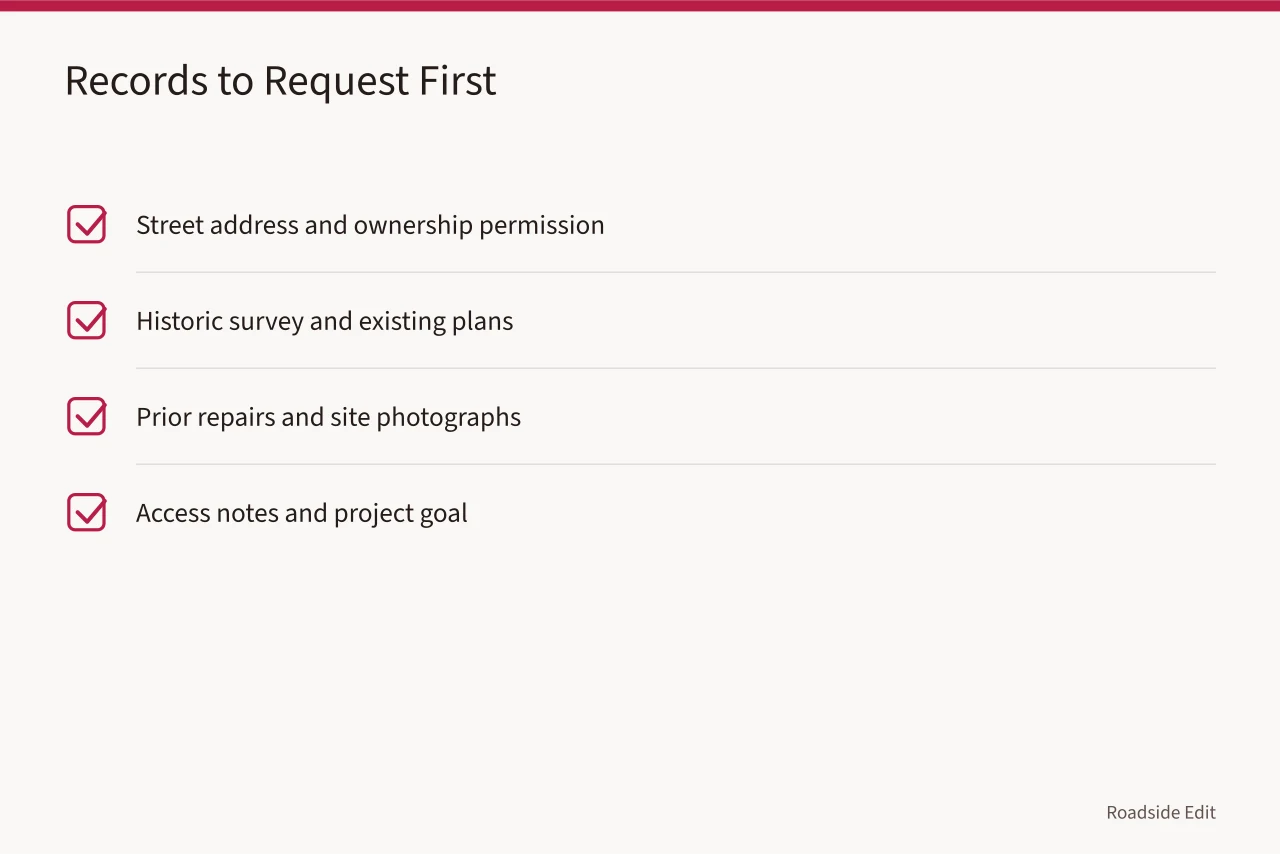
This is not busywork. A roadside building can carry a former name, a changed address, an incomplete history, or a project record that describes only one feature. The wrong property record can send a proposal in the wrong direction. Before comparing candidates, confirm that each is looking at the same building and the same requested outcome.
For historic properties, scope language cannot replace project evidence, and the National Park Service explains the Secretary of the Interior's Standards as a preservation treatment framework. Read the NPS explanation of the preservation standards.
A provider can explain how its proposed work relates to that framework, but the standards alone do not show a specific building qualifies, a particular method will be approved, or work has been completed.
Ask how safety responsibilities will be handled
Safety is not an extra question to ask after hiring. A roadside site may involve traffic, uneven ground, weather exposure, electrical equipment, construction areas, or public visitors. Ask who identifies site hazards, who controls the work area, what information workers receive, and who has authority to stop work if conditions change.
OSHA describes a safety and health program as a way for employers to find and fix hazards before they cause harm. Review OSHA's safety and health program guidance.
That supports a direct hiring question: "What is your plan for identifying and addressing hazards within your scope?" An article is not a safety plan, and it does not determine whether a particular site is safe. That assessment belongs to the responsible parties and qualified professionals.
Ask whether the provider needs site rules, traffic-control information, utility records, or permission to enter restricted areas. Put the answer in the proposal. A simple handoff note can prevent a later dispute about who was expected to arrange access or coordinate with another party.
Ask what access information the work requires
Do not assume that a visible entrance, ramp, or parking space answers an accessibility question. Ask what access facts the provider needs, what part of access is within the stated scope, and what they will document. If the job includes design or evaluation, ask whether the deliverable will identify assumptions and the standards used.
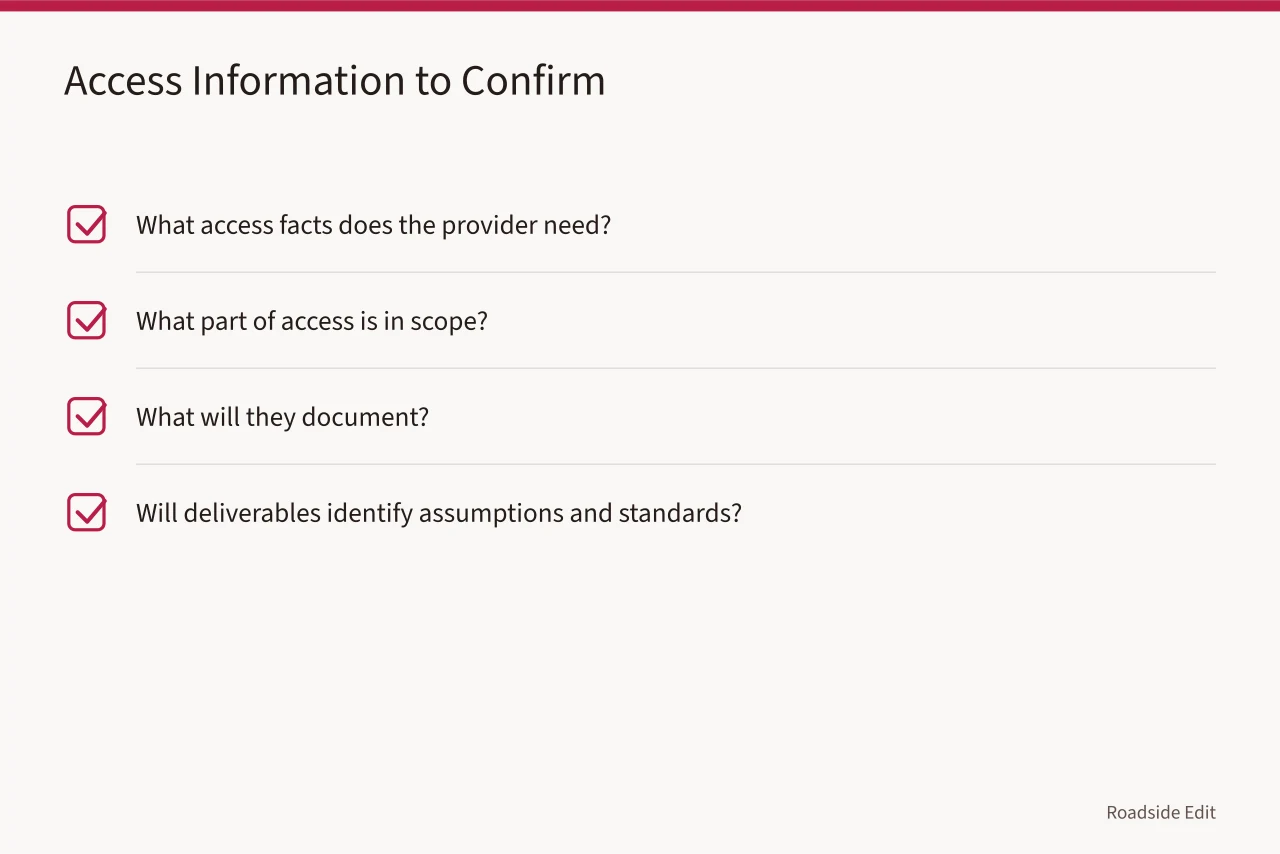
The U.S. Access Board publishes technical guidance for accessible routes. Consult the Access Board guide to accessible routes. The guide can help readers understand the language in a proposal. It cannot establish that a particular roadside building meets a requirement, nor can a portfolio image substitute for a property-specific review.
Keep the wording honest in any business profile or paid placement. A provider may state that it offers a service. Do not publish that it will make a building compliant, open to the public, or suitable for every visitor unless a direct and current record supports the precise statement.
Ask how the project will be documented
The best final question is: "What record will show what happened?" Ask for dated photos, a field note, a report, a drawing set, a change order, an invoice description, or a final summary that fits the scope. The answer will differ by task. The important part is that it is decided before the work begins.
Use a short handoff table in the project file:
| At the start | During the work | At the handoff |
|---|---|---|
| Agreed scope and property identifier | Approved changes and dated updates | Deliverables, source files, and open items |
| Access and safety contacts | Records of decisions | Date, responsible party, and next maintenance step |
This record does not turn a provider into an endorsee. It gives the next editor, owner, or contributor a factual account of what was requested and what was delivered. That is more useful than an uncheckable claim that someone was "the best" choice.
Use business listings with care
An article can include a business or organization as a clearly attributed listing. State the inclusion basis, such as a submitted profile, a public program directory, or a paid placement. Check concrete facts that can be checked, including the provided contact method or service description. Avoid superlatives, rankings, price claims, and availability claims unless an appropriate current source supports them.
Readers should be able to distinguish editorial information from provider statements. That clarity serves the reader and the legitimate business. It also makes updates easier if a company changes services, staff, location, or project focus.
Image context
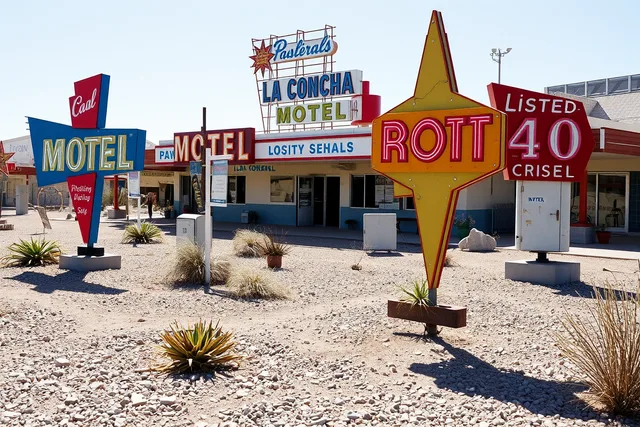
The catalog identifies the image and its documented subject. It does not establish the motel's current operating status, ownership, services, or relationship to a provider. Those claims would require a direct and current source.
Common questions
Should every provider receive the same questions?
Use the same core questions about scope, deliverables, exclusions, safety, access, and documentation. Add follow-up questions only when a provider's stated role requires them.
Does this guide recommend a particular provider?
No. It gives readers a way to compare written information. A hiring decision depends on the specific task, records, local requirements, and the provider's documented scope.
What if the provider will not put the scope in writing?
Pause the comparison. A written scope is the clearest way to understand what will be delivered, what is excluded, and what questions still need another answer.